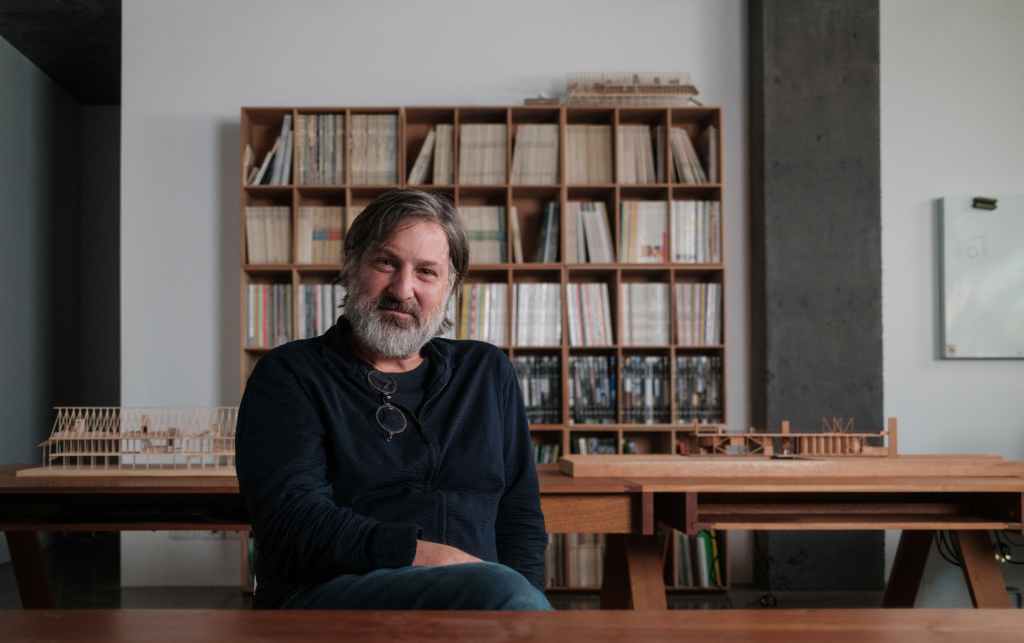
Smiljan Radić Clarke | The Pritzker Architecture Prize
Smiljan Radić Clarke | The Pritzker Architecture Prize
スミルヤン・ラディッチ・クラークの人生
Like his architecture, the layers of Smiljan Radić Clarke’s life form a noncontinuous history shaped by movement, openness, and the gradual construction of meaning. Born in Santiago to an immigrant family—his father’s parents from Brač, Croatia, and his mother’s from the United Kingdom—Radić grew up with a heightened awareness of belonging, fostering an understanding of life as something assembled, not merely inherited.
彼の建築と同様に、スミルヤン・ラディッチ・クラークの人生の層は、動き、開放性、そして意味の漸進的な構築によって形作られた非連続的な歴史を形成しています。サンティアゴで、父の両親がクロアチアのブラチ出身、母の両親がイギリス出身という移民の家庭に生まれたラディッチは、帰属意識を高めながら成長し、人生を単に受け継いだものではなく、組み立てられたものとして理解するようになりました。
“Sometimes, you have to produce your own roots. That gives you freedom,” expresses Radić.
「時には、自分自身のルーツを生み出さなければならないこともあります。それがあなたに自由を与えます」とラディッチは言います。
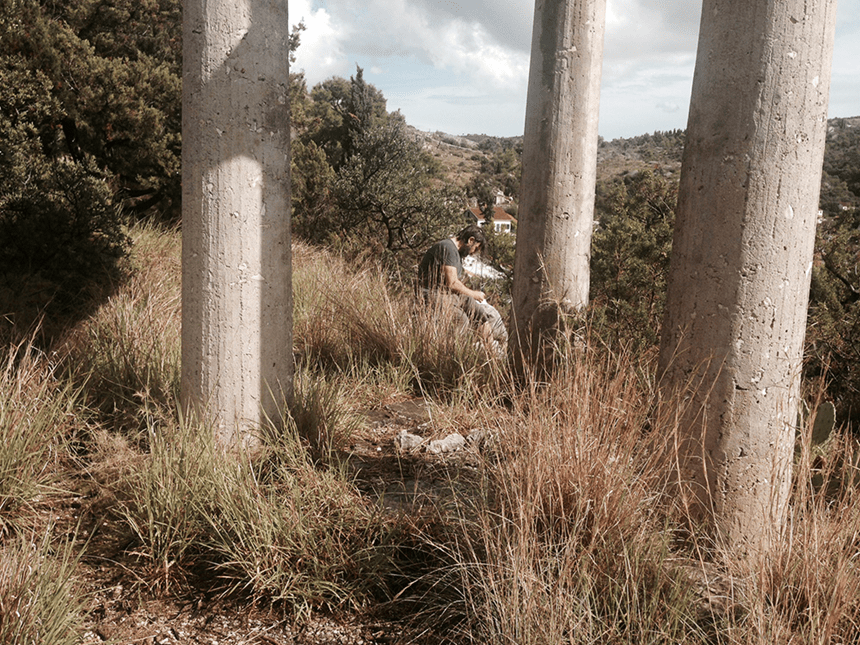
Photo courtesy of Smiljan Radić写真提供:スミリャン・ラディッチ
Radić’s path to architecture was not epiphanic, but emerged gradually through a series of experiences, doubts, and discoveries. He spent much of his childhood drawing and first encountered architecture at the age of fourteen, when an art teacher assigned him the task of designing a building as an exercise—an early memory that, in retrospect, resonates with the work he would later pursue. He studied architecture at Pontificia Universidad Católica de Chile, where he failed his initial attempt at the final examination before graduating in 1989. The setback proved formative, compelling him to study history at the Istituto Universitario di Architettura di Venezia, and travel extensively, which he regards as the most essential course of his education. Looking beyond conventional definitions of the discipline, philosophy, art, and allusion to mythical and literary references were infused into his imagery as much as into his forms.
ラディッチの建築への道は突然に始まったものではなく、一連の経験、疑問、発見を通じて徐々に明らかになりました。彼は幼少期の多くを絵を描くことに費やし、14 歳で初めて建築に出会ったのは、美術教師から練習として建物を設計するという課題が彼に与えられたときでした。振り返ってみると、この初期の思い出は、後に彼が追求する仕事に共鳴しています。彼はチリのカトリカ大学で建築を学びましたが、1989 年に卒業する前の最終試験で最初の試みに失敗しました。挫折は形成的なものであることが判明し、ヴェネツィア建築大学で歴史を学び、広範囲に旅行することを余儀なくされました。彼はそれが教育の最も重要なコースであると考えています。学問分野の従来の定義を超えて、哲学、芸術、神話や文学への言及が、彼の形だけでなくイメージにも注入されました。
“Ideas inhabit things,” he reflects. “I have always tried to build settings where others might discover emergent ideas.”
「アイデアは物事に宿るのです」と彼は振り返ります。 「私は常に、他の人が新しいアイデアを発見できるような環境を構築しようと努めてきました。」
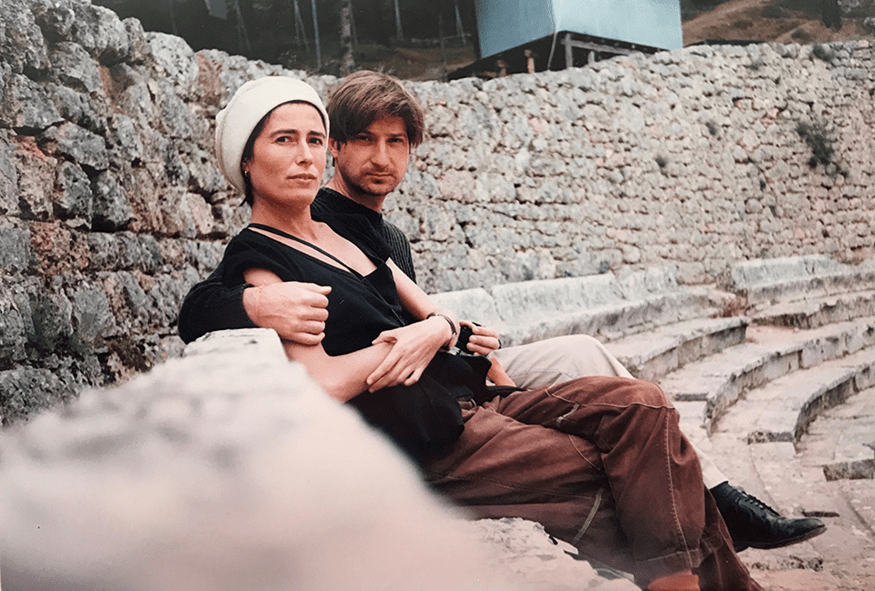
Photo courtesy of Smiljan Radić写真提供:スミリャン・ラディッチ
During his collegiate years, he met sculptor Marcela Correa, who would later become his client and eventually his wife. He established his eponymous practice, Smiljan Radić Clarke, in 1995 in Santiago, Chile, which remains intentionally intimate in scale. Together, they designed her first house, Casa Chica (Vilches, Chile, 1997), a 24-square-meter building, which they built by hand in the Andes Mountains. Although the pair collaborate on occasion, they exchange a daily ongoing living dialogue of ideas carried through time.
大学時代に、後にクライアントとなり、やがて妻となる彫刻家マルセラ・コレアに出会った。彼は 1995 年にチリのサンティアゴに自分の名を冠した診療所「スミルジャン ラディッチ クラーク」を設立しましたが、この診療所は意図的に親密な規模を保っています。彼らは一緒に、アンデス山脈に手作りで建てた 24 平方メートルの建物、カサ チカ (チリ、ヴィルチェス、1997 年) という彼女の最初の家を設計しました。二人は時折コラボレーションすることもありますが、時を超えて受け継がれるアイデアについて毎日継続的に生きた対話を交わします。
Personal circumstances and sustained inquiry led Radić to reexamine enclosure as condition of resistance, care, and quiet resilience. “There is a complexity in enclosure: a shelter provides a distance from reality, whereas a refuge urges you to feel that the life inside is unique. But what we need is protection—a place of stability to accept fragility.” This tension between shelter and refuge, protection and introspection, mirrors his own experience of constructing stability in the absence of fixed roots.
個人的な状況と継続的な調査により、ラディッチは抵抗、配慮、そして静かな回復力の条件として囲いを再検討するようになりました。 「囲いの中には複雑さがあります。避難所は現実から距離を置きますが、避難所は中での生活が独特であると感じるように促します。しかし、私たちに必要なのは保護、つまり脆弱さを受け入れる安定の場所です。」避難所と避難所、保護と内省の間のこの緊張は、固定された根のない中で安定を構築した彼自身の経験を反映しています。
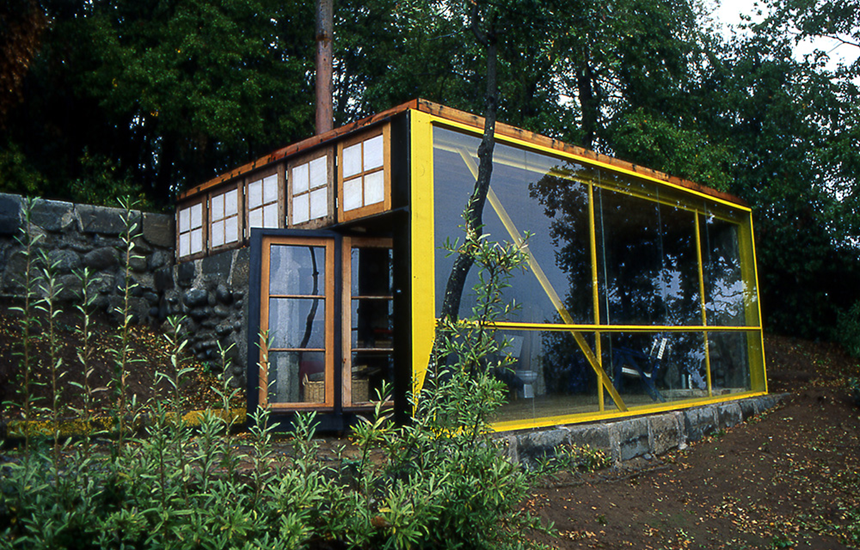
Photo courtesy of Smiljan Radić写真提供:スミリャン・ラディッチ
Over time, these interests expanded across scales and typologies, from civic and cultural institutions, commercial buildings, private residences, and temporary structures. With Correa, he created The Boy Hidden in a Fish (Venice, Italy, 2010), a granite and cedar installation for the entrance of the 12th International Architecture Exhibition at the Venice Architecture Biennale curated by Sejima Kazuyo, Juror and 2010 Pritzker Prize Laureate, which shelters human figures within mass, reflecting this attention to bodily and emotional register.
時間の経過とともに、これらの関心は、市民施設や文化施設、商業ビル、個人住宅、仮設構造物に至るまで、規模や類型を超えて拡大しました。コレアとともに、彼はヴェネツィア建築ビエンナーレの第12回国際建築展の入場用の花崗岩と杉のインスタレーション「魚に隠れた少年」(イタリア、ヴェネツィア、2010年)を制作した。審査員で2010年プリツカー賞受賞者の妹島和世が監修したもので、塊の中に人物を閉じ込め、身体的および感情的な記録への注意を反映している。
He was selected to design the 14th Serpentine Pavilion (London, United Kingdom, 2014), a translucent fiberglass shell resting upon load-bearing stones, resulting in a temporary refuge that is neither fully enclosed nor openly transparent. His works suggest an architecture that remains attuned to emotional presence and the quiet intelligence of construction.
彼は、第 14 回サーペンタイン パビリオン (イギリス、ロンドン、2014 年) の設計者に選ばれました。このパビリオンは、耐荷重石の上に置かれた半透明のグラスファイバー製のシェルで、完全に囲まれておらず、完全に透明でもない一時的な避難所となっています。彼の作品は、感情的な存在と建築の静かな知性に同調し続ける建築を示唆しています。
In 2017, Radić founded the Fundación de Arquitectura Frágil, housed within his home studio in Santiago, to support experimental architecture that challenges disciplinary boundaries. Through exhibitions, workshops, and shared inquiry, the foundation reflects his belief in architecture as a collective and evolving practice.
2017 年、ラディッチは、分野の境界に挑戦する実験的な建築を支援するために、サンティアゴの自宅スタジオ内にフラジル建築財団を設立しました。この財団は、展覧会、ワークショップ、共有された探求を通じて、集合的かつ進化する実践としての建築に対する彼の信念を反映しています。
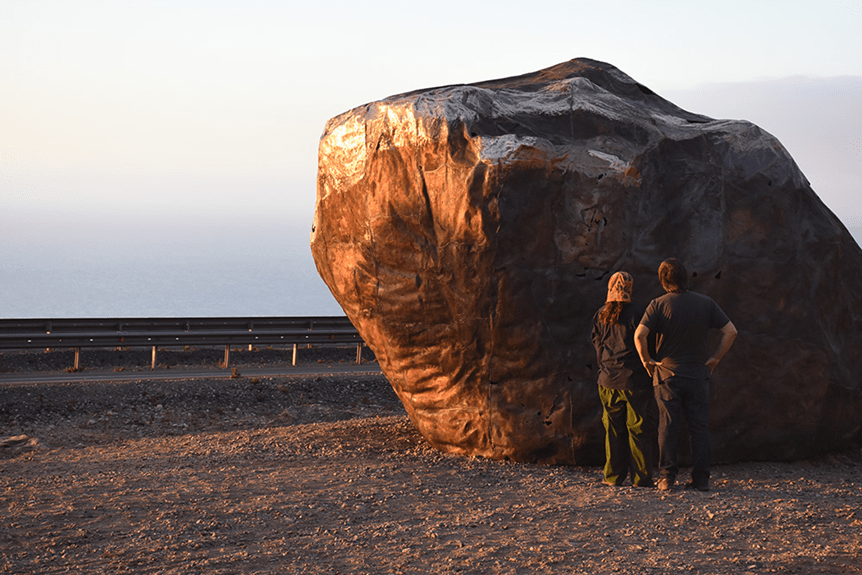
Photo courtesy of Marcial Ugarte写真提供:マルシャル・ウガルテ
Radić’s work has been recognized with numerous international honors, including being named Best Architect Under 35 by the Colegio de Arquitectos de Chile (Chile, 2001), the Architectural Record Design Vanguard Award (United States, 2008), the Oris Award (Croatia, 2015), the Arnold W. Brunner Memorial Prize from the American Academy of Arts and Letters (United States, 2018), and the Grand Prize at the Pan-American Architecture Biennial of Quito (Ecuador, 2022). He is an Honorary Member of the American Institute of Architects and an Honorary Fellow of the Croatian Academy of Sciences and Arts, since 2009 and 2020, respectively.
ラディッチの作品は、チリ建築学会による 35 歳以下の最優秀建築家賞 (チリ、2001 年)、建築レコード デザイン ヴァンガード賞 (米国、2008 年)、オリス賞 (クロアチア、2015 年)、アメリカ芸術文学アカデミーのアーノルド W. ブルナー記念賞 (米国、 2018年)、キトのパンアメリカン建築ビエンナーレ(エクアドル、2022年)でグランプリを受賞。 2009 年からはアメリカ建築家協会の名誉会員、2020 年からはクロアチア科学芸術アカデミーの名誉フェローを務めています。
Radić’s work has been featured in major exhibitions internationally, including Global Ends at Gallery Ma (Tokyo, Japan, 2010); Un Ruido Naranjo at Museum of Contemporary Art, (Hiroshima, Japan, 2012); The Wardrobe and the Mattress, Hermès Gallery, Tokyo, with Marcela Correa (Tokyo, Japan, 2013); Bus Stop for Krumbach at Kunsthaus Bregenz (Bergenz, Austria, 2013); Smiljan Radić: BESTIARY at TOTO Gallery Ma (Tokyo, Japan 2016); The House for the Poem of the Right Angle in Endless House: Intersections of Art and Architecture at The Museum of Modern Art (New York, United States, 2015–2016); and Guatero Bubble at the XXII Bienal de Arquitectura y Urbanismo de Chile (Santiago, Chile, 2023).
ラディッチの作品は、ギャラリー・マのグローバル・エンズ(東京、日本、2010年)など、国際的な主要な展覧会で取り上げられています。 「ウン・ルイド・ナランジョ」現代美術館、(広島、日本、2012年) 「ワードローブとマットレス」、エルメスギャラリー、東京、マルセラ・コレアと(東京、日本、2013年)。 クンストハウス・ブレゲンツのクルムバッハ行きバス停 (ベルゲンツ、オーストリア、2013)。 スミルヤン・ラディッチ:BESTIARY at TOTO ギャラリー・間(東京、日本 2016)。 「エンドレス・ハウス:芸術と建築の交差点」ニューヨーク近代美術館(ニューヨーク、米国、2015~2016年)の「直角の詩の家」。第22回チリ建築ビエナル・都市化ビエンナーレ(チリ、サンティアゴ、2023年)でのグアテロ・バブル。
Radić continues to live and work from Santiago, Chile, sustaining an intentionally intimate practice in which architecture remains personal, attentive, and deeply felt.ラディッチはチリのサンティアゴに住み、働き続け、建築が個人的で、気配りがあり、深く感じられるものであり続けるという意図的に親密な実践を維持しています。


コメントを残す