Smiljan Radić Clarke | The Pritzker Architecture Prize
Smiljan Radić Clarke | The Pritzker Architecture Prize
選考理由
The Pritzker Architecture Prize is awarded in recognition of exceptional talent, vision, and commitment that, over time, have given rise to profound and enduring contributions to humanity and the built environment through the art of architecture. Smiljan Radić’s body of work embodies these values in their most radical and essential form.
プリツカー建築賞は、建築芸術を通じて、時を経て人類と建築環境に深く永続的な貢献をもたらした卓越した才能、ビジョン、取り組みを讃えて授与されます。スミルヤン・ラディッチの一連の作品は、これらの価値観を最も過激かつ本質的な形で体現しています。
To render the qualities of his architectural work in spoken language is intrinsically difficult, for in his designs he works with dimensions of experience that are immediately palpable but escape verbalization—like the perception of time itself: immediately recognizable, yet conceptually evasive. His buildings are not conceived simply as visual artifacts; rather, they demand embodied presence.
彼の建築作品の特質を話し言葉で表現することは本質的に難しい。なぜなら、彼のデザインでは、時間そのものの認識のように、すぐに明白だが言語化を逃れる経験の次元に取り組んでいるからだ。すぐに認識できるが、概念的には回避されている。彼の建物は、単に視覚的な人工物として考えられているわけではありません。むしろ、具体的な存在を要求します。
A first fundamental paradox of Smiljan Radić’s architecture is in that it establishes a personal, almost introspective point of entry, without culminating in withdrawal. On the contrary, what begins as an individual encounter expands into a broader, collective resonance. This is, perhaps, the nature of true art: it addresses each of us as singular beings, one to one, and yet propels us towards a shared origin—an atavistic place beyond race, gender, or culture. Such a capacity acquires particular relevance in times of polarisation and dehumanisation, and may well constitute the true value of an architect whose work can be described, without hesitation, as profoundly original: the art of architecture practiced as a sustained attempt to reconnect all individuals with a deeper origin. Importantly, this should not be mistaken for nostalgia or historical revivalism. His stripping away of the surface is grounded in radical experimentation and an unrelenting interrogation of convention, precedent, and the well-trodden path. Herein lies a further paradox: his unorthodox approach to design may initially appear unusual, unexpected—even rebellious—yet far from producing alienation or estrangement, his anti-canonical stance feels fresh and unprecedented. It conveys the unmistakable sensation of encountering something new.
スミルヤン・ラディッチの建築の最初の基本的な矛盾は、最終的に撤退に至ることなく、個人的な、ほとんど内省的な入り口を確立していることです。それどころか、個人的な出会いとして始まったものが、より広範な集団的な共鳴へと拡大していきます。おそらく、これが真の芸術の性質です。それは、私たち一人ひとりを特異な存在として一対一で扱いながらも、私たちを共通の起源、つまり人種、性別、文化を超えた先祖代々の場所へと駆り立てます。そのような能力は、二極化と非人間化の時代に特に関連性を獲得し、建築家の真の価値を構成するものと考えられます。その作品は、ためらうことなく非常に独創的であると説明できます。建築芸術は、すべての個人をより深い起源に再接続する持続的な試みとして実践されています。重要なのは、これをノスタルジーや歴史復興主義と誤解してはならないことです。彼の表面からの剥ぎ取りは、過激な実験と、慣例、前例、そしてよく踏まれた道に対する容赦ない尋問に基づいています。ここには更なる矛盾が横たわっている。デザインに対する彼の型破りなアプローチは、最初は珍しく、予想外で、反抗的でさえあるように見えるかもしれないが、疎外感や疎外感を生み出すどころか、彼の反規範的な姿勢は新鮮で前例のないものに感じられる。新しいものに出会ったような、なんとも言えない感覚が伝わってきます。
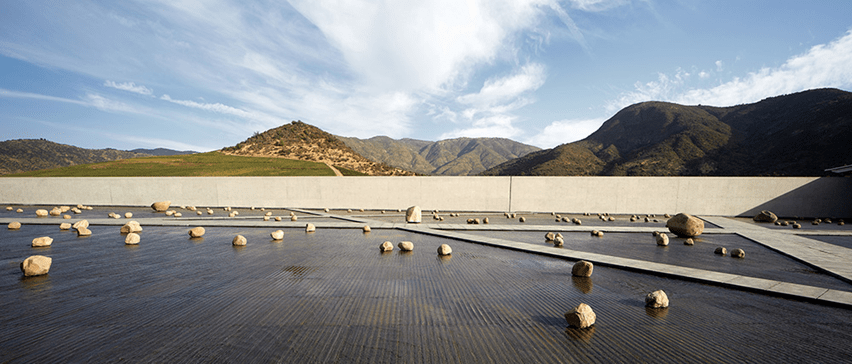
Vik Millahue Winery, photo courtesy of Cristobal Palmaヴィク・ミラウエ・ワイナリー、写真提供:クリストバル・パルマ
Through unobvious connections and patterns of circulation, Radić’s buildings offer a multiplicity of stages for users to act, interact, and even change the narratives that unfold within them. The masterful composition of volumes and the precise calibration of scales lend a sense of monumentality to the everyday life, whether experienced at an individual or public level. In Radić’s architecture, monumental presence is reworked through fragility, lightness and apparent instability, achieved not through scale alone, but through atmosphere, material tension and spatial intensity. This allows everyday actions—walking, waiting, gathering—to acquire significance without being subordinated to a grand ideological narrative. Through his deeply democratic approach, the monumental is thus returned to common experience rather than reserved for exceptional moments.
ラディッチの建物は、目に見えないつながりと循環パターンを通じて、ユーザーが行動し、対話し、さらには内部で展開する物語を変えるための多様なステージを提供します。ボリュームの見事な構成とスケールの正確な調整は、個人レベルであれ、公共レベルであれ、日常生活に記念碑的な感覚を与えます。ラディッチの建築では、記念碑的な存在感が、もろさ、軽さ、見かけの不安定さによって再加工されており、規模だけではなく、雰囲気、物質的な緊張感、空間の強さによって実現されています。これにより、歩く、待つ、集まるといった日常の行動が、壮大なイデオロギーの物語に従属することなく重要性を獲得できるようになります。彼の極めて民主的なアプローチを通じて、この記念碑は例外的な瞬間のために確保されるのではなく、共通の経験に戻されます。
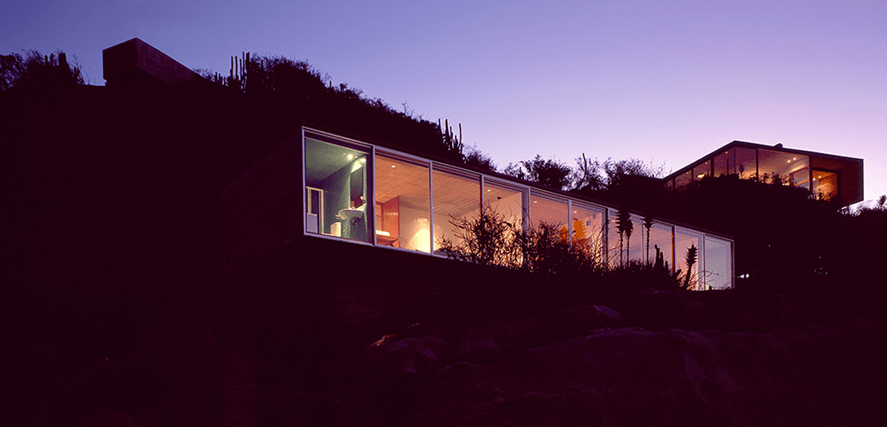
Pite House, photo courtesy of © Erieta Attaliパイト ハウス、写真提供:© Erieta Attali
Through a body of work positioned at the crossroads of an iconoclast language, material exploration and cultural memory, Smiljan Radić favours fragility over any unwarranted claim to certainty. His buildings may appear temporary, unstable, or deliberately unfinished—almost on the point of disappearance—yet they provide a structured, optimistic and quietly joyful shelter, embracing vulnerability as an intrinsic condition of lived experience.
スミリャン・ラディッチは、偶像破壊の言語、物質的探求、文化的記憶の交差点に位置する一連の作品を通じて、不当な確実性の主張よりも脆弱性を支持しています。彼の建物は、一時的で、不安定で、あるいは意図的に未完成で、ほとんど消滅寸前であるように見えるかもしれませんが、生きた経験の本質的な条件としての脆弱性を受け入れ、構造化された楽観的で静かに楽しい避難所を提供します。
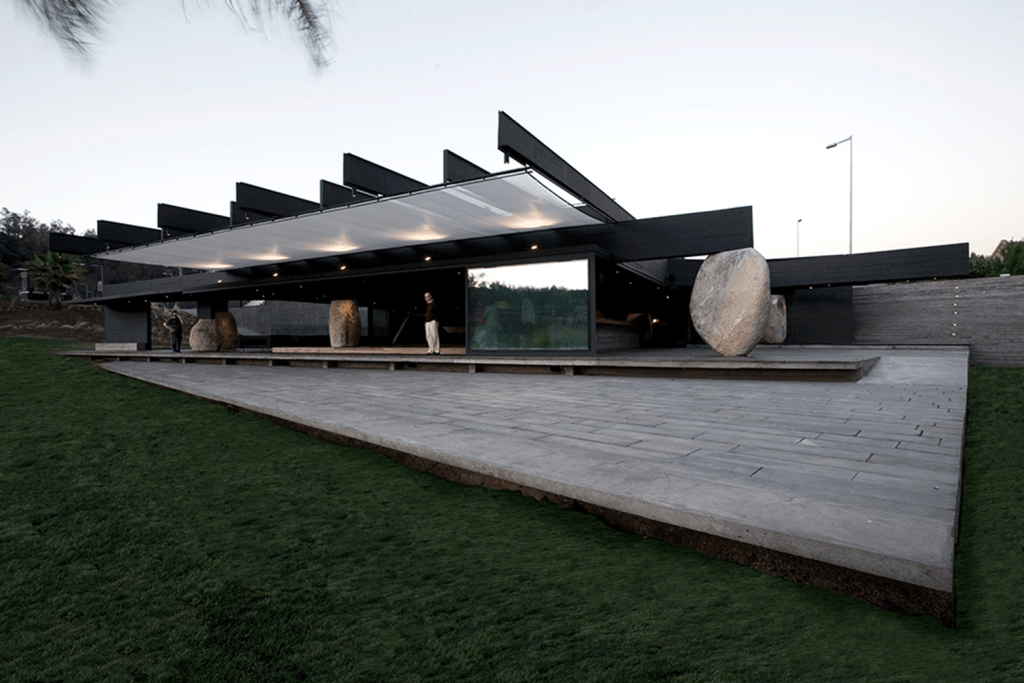
Restaurant Mestizo, photo courtesy of Gonzalo Pugaレストラン メスティーソ (写真提供: Gonzalo Puga)
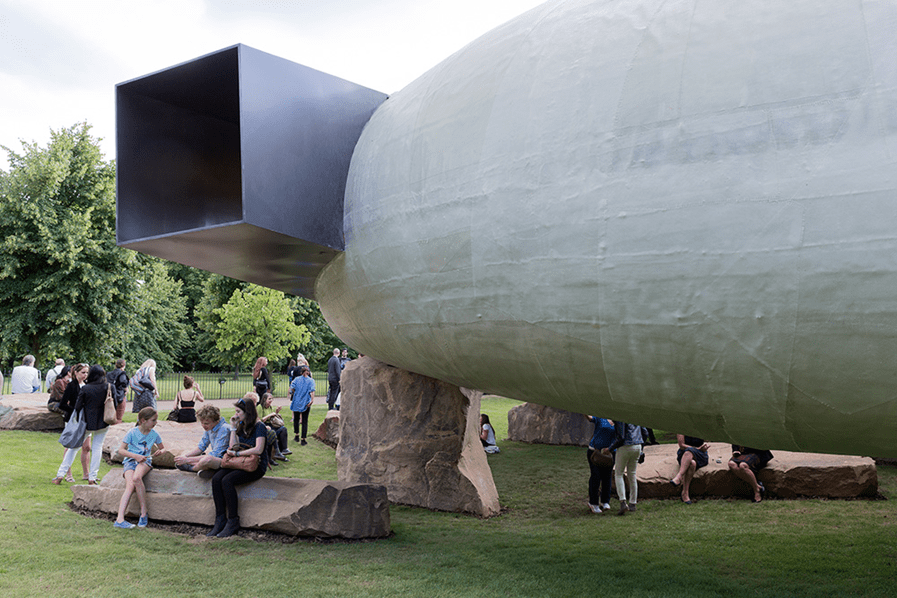
Serpentine Gallery Pavilion, photo courtesy of Iwan Baanサーペンタイン ギャラリー パビリオン、写真提供:Iwan Baan
They are not firmly anchored to the ground; rather, they are delicately placed upon it, often hovering slightly above the surface and only occasionally making contact. Any lasting alteration to the site is carefully avoided, as though they could be removed at any moment and the ground restored to its original state. Inspired by the powerful and yet seismic Chilean environmental context and shifting from the logic—often implicit in construction—of domination and ownership towards coexistence, Radić presents architecture as a guest rather than a master of the site, acknowledging the primacy of the landscape and, by extension, of collective memory and shared territory over individual authorship.
地面にしっかりと固定されていません。むしろ、それらは慎重にその上に置かれ、多くの場合、表面のわずか上にホバリングし、時々接触するだけです。敷地への永続的な改変は、いつでも撤去して地面を元の状態に戻すことができるかのように、慎重に避けられます。力強くも揺るぎないチリの環境文脈に触発され、しばしば建設に暗黙的に含まれる支配と所有の論理から共存へと転換したラディッチは、建築を敷地の主人ではなくゲストとして提示し、風景の優先性、ひいては集合的な記憶と共有領域の優先性を個人の作者よりも認めている。
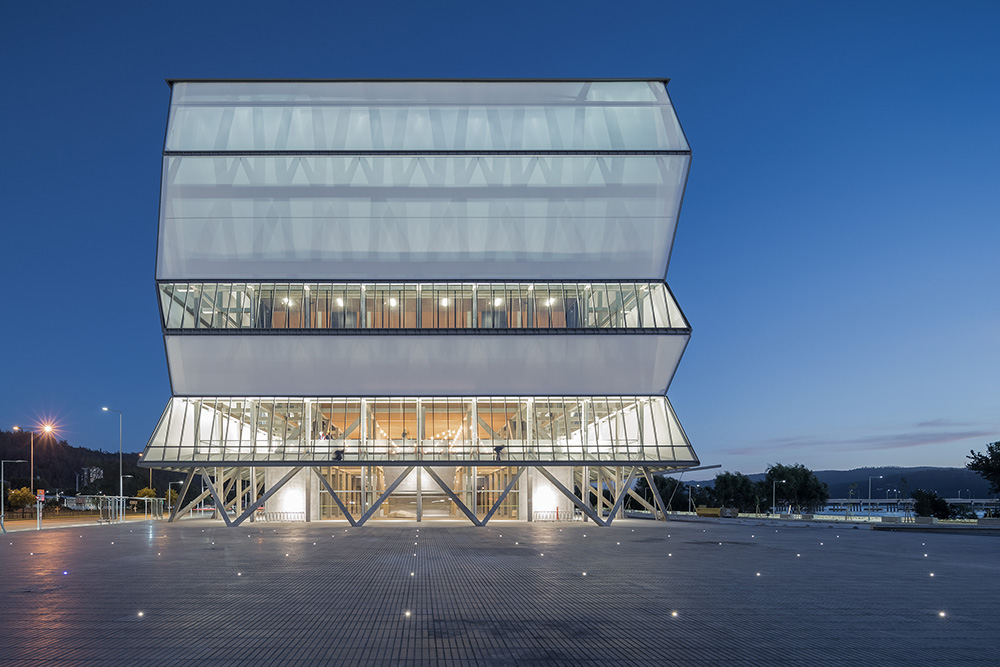
This sense of architectural impermanence is frequently expressed through the choice of materials. While varying from one project to another, these are always carefully considered, contextually responsive and informed by local availability. Reinforcing the democratic ethos of his work, Radić employs materials—whether industrial or natural, refined or traditionally regarded as marginal—in ways that are neither nostalgic nor merely pragmatic. Instead, they unsettle established hierarchies of value: high and low, refined and crude, permanent and provisional coexist without clear distinction. This material equivalence mirrors the social openness of his spaces, in which no user is privileged over another. The circus tent coronating the roof of NAVE in Santiago, the white membrane enveloping the Teatro Regional del Biobío in Concepción—glowing with a warm, welcoming light at dusk—and the monumental Guatero inflatable pavilion designed for the Santiago Architecture Biennale all become structurally sophisticated yet playful stages, in which unexpected textures and colours engage with volumes of equally unexpected form.
この建築の無常感は、材料の選択を通じてよく表現されます。プロジェクトごとに異なりますが、これらは常に慎重に検討され、状況に応じて対応し、ローカルの可用性によって情報が提供されます。ラディッチは、自身の作品の民主主義的精神を強化するために、工業的か自然物か、洗練されたものか伝統的に限界と見なされていたかを問わず、ノスタルジックでも単なる実用的でもない方法で素材を採用しています。むしろ、それらは確立された価値の階層を揺るがすものです。高貴なものと低俗なもの、洗練されたものと粗雑なもの、永続的なものと暫定的なものが明確な区別なく共存しています。この物質的な同等性は、どのユーザーも他のユーザーに対して特権を持たない、彼の空間の社会的開放性を反映しています。サンティアゴの NAVE の屋根を飾るサーカスのテント、コンセプシオンのテアトロ ジョジョナル デル ビオビオを包み込む白い膜は、夕暮れ時には暖かく心地よい光で輝いています。そして、サンティアゴ建築ビエンナーレのために設計された記念碑的なグアテロのインフレータブル パビリオンはすべて、構造的に洗練されておりながらも遊び心のある舞台となり、予期せぬテクスチャーと色が同様に予期せぬ形のボリュームと絡み合います。
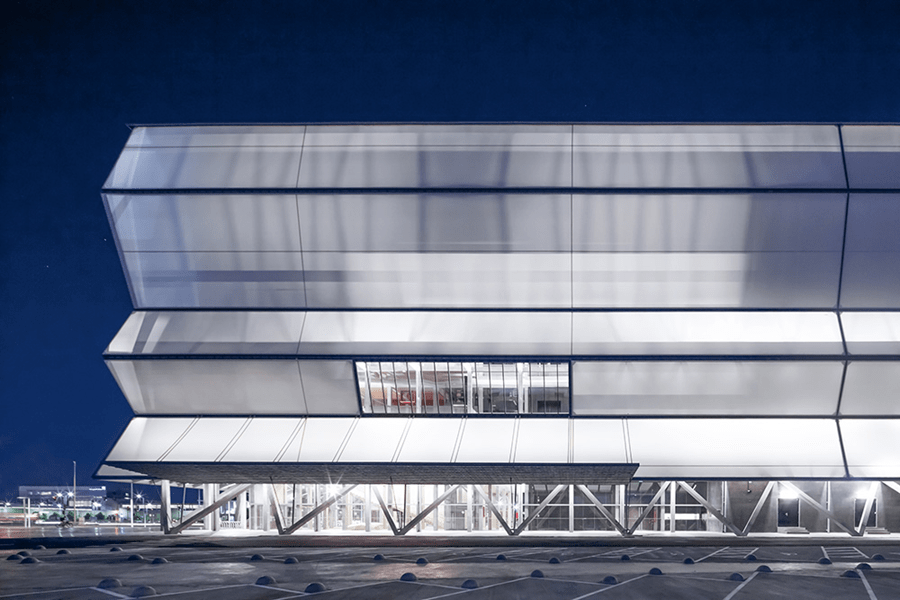
Teatro Regional del Biobío, photo courtesy of Cristobal Palmaビオビオ地方劇場、写真提供:クリストバル・パルマ
If architecture gives shape to the ways in which people live, Radić’s work produces spatial experiences that feel at once surprising and entirely natural. They are surprising in their flexible capacity to combine, question and dismantle established typologies; natural in the way they emerge both from his personal history and from that of those who will ultimately inhabit his buildings. While fully responsive to its function, each project contains an element of unexpectedness: to experience Smiljan Radić’s buildings is to have one’s curiosity provoked and sustained. He pushes coherent spatial strategies to their limits, developing them with rigour in order to actively engage the user: no specialised knowledge is required to “understand” the space, because understanding is never complete. His work defies the constraints of a single concept: the spaces he creates are often ambiguous, at times even unsettling, never pre-defined. They resist complete comprehension through a single viewpoint, and it is precisely this resistance that restores depth and complexity to architecture. Giant boulders set upright—like at the Mestizo Restaurant in Santiago, buildings that appear barely to touch the ground—like Casa Pite in Papudo, and the frequent rejection of the conventional Cartesian coordinate axes—the House for the Poem of the Right Angle in Vilches—all invite interpretation, rather than consumption.
建築が人々の暮らし方に形を与えるとすれば、ラディッチの作品は、驚きと同時にまったく自然に感じられる空間体験を生み出します。彼らは、確立された類型を組み合わせ、疑問を呈し、解体する柔軟な能力に驚くべきです。彼の個人的な歴史と、最終的に彼の建物に住むことになる人々の歴史の両方から、それらが自然に浮かび上がってくるのです。それぞれのプロジェクトはその機能に完全に応えている一方で、意外性の要素を含んでいます。スミルヤン・ラディッチの建物を体験することは、好奇心を刺激され、持続させることです。彼は一貫した空間戦略を限界まで推し進め、ユーザーを積極的に関与させるために厳密に開発しました。空間を「理解」するのに専門知識は必要ありません。理解は決して完全ではないからです。彼の作品は、単一のコンセプトの制約を無視しています。彼が作り出す空間は、多くの場合曖昧で、時には不安さえ感じさせ、事前に定義されることはありません。それらは単一の視点による完全な理解に抵抗しており、まさにこの抵抗こそが建築に深みと複雑さを取り戻すのです。サンティアゴのメスティーソ・レストランのように直立して設置された巨大な岩、パプドのカーサ・ピーテのように地面にほとんど触れていないように見える建物、そして従来のデカルト座標軸の頻繁な拒否であるヴィルチェスの直角の詩の家などはすべて、消費ではなく解釈を促します。
For reminding us that architecture is an art, in that it touches the very core of the human condition; for allowing the discipline to embrace imperfection and fragility, offering quiet shelters in a world shaped by uncertainty, without the need to be louder or more spectacular in order to matter; for creating buildings whose hybrid nature reflects the contemporary blurring of disciplinary boundaries, and which do not speak on behalf of people but instead allow people to find their own voice through them, Smiljan Radić Clarke is named the 2026 Pritzker Prize Laureate.
建築は人間の状態の核心に触れるという点で芸術であることを私たちに思い出させてくれました。不完全さと脆弱性をこの規律が受け入れることを可能にし、重要視するためにより騒々しさや華やかさを必要とせず、不確実性によって形成された世界に静かな避難所を提供することに対して。スミルヤン・ラディッチ・クラークは、現代の分野の境界線の曖昧さを反映したハイブリッドな性質を持ち、人々を代表して話すのではなく、人々が建物を通して自分自身の声を見つけることを可能にする建物を作成したことで、2026年のプリツカー賞受賞者に選ばれました。

コメントを残す