










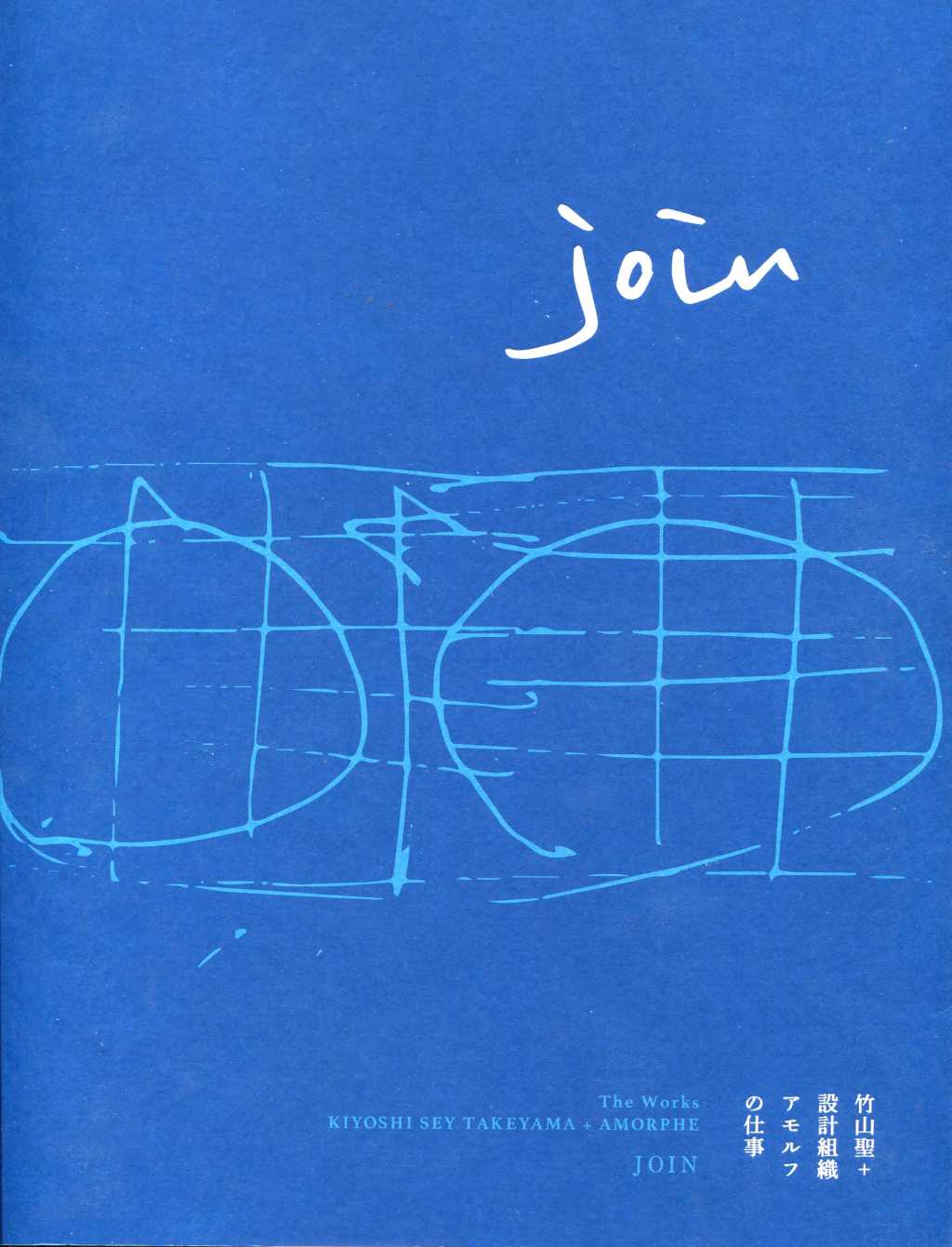
『竹山聖 建築思想集――都市・身体・可能世界』02
都市の相貌/建築の顔
Physiognomy of the City / Façade of Architecture
竹山聖
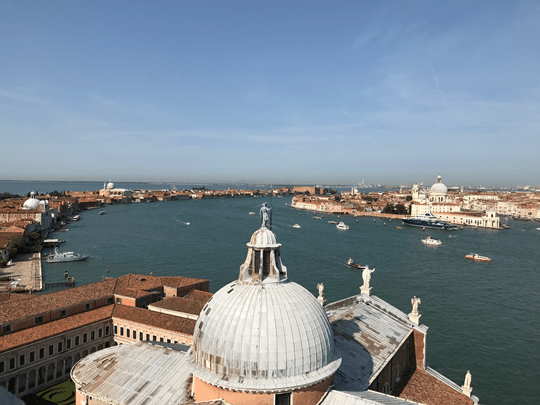
ヴェネチア
たとえばヴェネチア。誰もがすぐにその相貌を思い浮かべることができる。海に浮かんだ洲と干潟に築かれた都市。運河が走り水路がめぐり、タクシーもバスも船だ。ゴンドラはもう一つの顔。カナル・グランデが逆S字に街を分かち、両端にある鉄道駅とサン・マルコ広場を結んでいる。カナル・グランデを渡るには駅前の橋とリアルト橋しかない。橋も道も歩行者専用だ。自動車の姿は一切ない。
カナル・グランデに面しては見事なパラッツォが並び、華やかな栄光を偲ばせる。サン・マルコ広場はサン・マルコ寺院と塔がその焦点となっていて、寺院に隣接するパラッツォ・ドゥカーレが小広場と海とに面している。大広場と小広場を囲み、あるいは海に向かう建築がみな各々の顔を持ちながら、独特のハーモニーを奏でる。この海と空に開かれた一帯の景観がまさしく都市ヴェネチアの顔である。あとは秘めやかな迷路。歩き回っても水路に行き当たっては行き止まり、迷い迷って方向感覚を失う。明るい日差しに照らされた意識の場を支える暗がり、無意識の場。祝祭と官能という、合理では決して割り切れない都市。
2018年の夏の終わりにヴェネチアを訪れた。香港パビリオンから招待されて参加したビエンナーレの出品作を確認するために。その前の一週間をスイスの山間部で過ごした。アルプスの谷間、ヴァレー地方の中心都市の一つ、マルティニからさらに山奥に入ったルシャーブルの街で開かれた建築・音楽・環境会議Rencontre Architecture Musique Ecoligieに参加するためだ。そのあと、特急列車ユーロシティで行政区の首都シオンからヴェネチアに移動した。
スイスはすでに秋の気配だったが、アルプスに穿たれたシンプロン・トンネルを抜けてイタリアに入ると急に日差しが強まり、景色の明るさが増した。車内も大きな声とジェスチャーで騒がしくなった。スイスの田舎の牧歌的な風景が一転し、樹木の色も変わる。列車はいくつもの都市の点在する平原を通過する。ミラノ、ブレシア、ヴェローナ,ヴィチェンツァ・・・、やがて海に浮かぶ特異な都市の相貌が現れる。ヴェネチアである。長くまっすぐな橋の先、街の際の港に巨大な客船が二隻停泊しているのが見える。細やかな建築のスケールに比べてあまりに大きい。列車はやがて終点サンタルチア駅に滑り込む。
交易を都市活動の中心に置いて発展したこの街は、莫大な富を集めた。それを防御と美観に投入した。東地中海を席巻する強力な海軍を持つ都市国家、という点で、古代ギリシアのアテネなどと共通している。古代ギリシア都市もまた、人々を惹きつける美観を形成した。都市は、とりわけ広範な地域との交易をその活動の中心とする都市は、魅力的な都市景観を持つ。景観的プレゼンテーションを行う。比喩的に言うなら、いわば美しい花を咲かせるのである。富をもたらす虫たちを集めるために。そこが、安心して交易を行うことのできる平和領域である、ということを示すために。平和領域の形成のため、美しい衣装のうしろにはつねに、強固な鎧が隠れている。
ファサード
ヨーロッパの建築の歴史はファサードの歴史である。そう言い切ってもいいほどに、顔の形成に重きを置いて来た。都市に美しい顔が必要であったように、都市を形成する建築にも顔が要求された。広場が商業と政治の中心であったから、広場に面する建築にはとりわけ権威ある顔が必要とされた。
地中海沿岸では、言語もまた、公共の場で話される政治の言葉として発達した。屋外でもしっかりと聞き取ることができるよう、アーティキュレーションが明快で、論理構造も明快な言語となった。1996年のミラノ・トリエンナーレに日本パビリオンのコミッショナーとして参加したときに、下院議長の若い女性が真っ白なスーツで現れて開会のスピーチを行ったのだが、イタリア語はほとんど理解できないものの、その音楽のように豊かなイントネーションを持つ言語の響きに、これはまさしく広場で演説をするために鍛えられた言葉だと思った。狭い室内でこそこそ密談するために発達した言葉とは、まったく違う。
すなわち表に面してはっきり自己を主張する言葉と建築を、ヨーロッパは鍛え上げて来た。日本では建築は基本的に都市から切れていて、表に姿を見せない。顔を持つ必要がない。社寺は奥まっているし、邸宅は塀に囲まれている。いわば、退く美学、である。自己を主張することは、ない。言葉も主語を必要としない。近世に発達した京町家にファサードがあるといえばいえぬこともない。もちろん商売の建築であるから表に面した顔はある。しかし、一つ一つが別々の顔を持ち自己を主張する類の建築ではない。表は化粧して街並みを作っても、強い自己主張はなく、隣近所と建築的要素を共有して都市の文脈に溶け込み、むしろ文化的関心は奥のニワやハナレにあって、市中の山居をその理想としている。
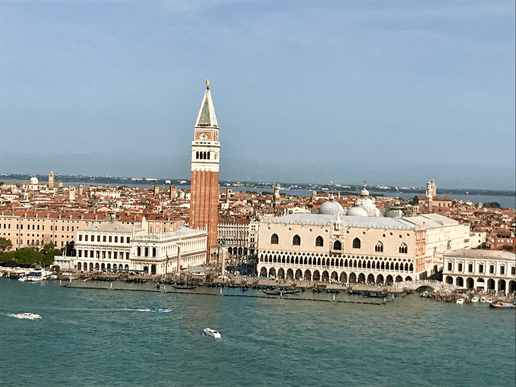
宮殿
宮殿は、ヨーロッパでは外に対する顔をもっとも強く主張する建築類型だが、日本ではひっそりと奥まって立てられる。25年ほど前、ギリシアの建築家を桂離宮に案内したときのこと。最近でこそKatsura Villaと訳されているが、Katsura Palaceとされていた時代もあった。Palace、つまり宮殿である。彼は笑いながら、その秘めやかで清楚な佇まいを前にして、Where is the palace?と言って笑った。
もちろん桂離宮のことは知っており、ブルーノ・タウトやグロピウスによる、透明で軽やかでシンメトリーから脱し正面を持たない近代建築の形式の先取り、との評価も把握していた。だからこそ、宮殿はどこだ?と冗談を言ったのである。宮殿なら決まって持っているはずの威厳やら押し出しやら、なにより「顔」がないじゃないか、と。そう、日本の建築には、基本的に「顔」がない。そのような都市の文脈と「退く」美学を形成して来たのだ。建築においても言語においても、文化一般においても。日本社会はベルサイユ宮殿や壮麗な都市景観をめざすバロック都市計画を必要とはしなかった。
権威
ヴェネチアでもパラッツォが都市の顔を形成することはすでに触れた。これはヴェネチアのみならず、ヨーロッパの財力権力誇示の常套手段であって、人間はこうした権威にえてして弱い。近代社会でも銀行などの金融機関は権威的なファサードを纏う伝統を引き継ぎ、GHQはお堀端でもっとも見事なファサードを持つ第一生命館を日本統治の拠点として選んだ。
ヨーロッパと日本だけを比較対照するのは片手落ちというものだが、近代文明における普遍と局所の代表としては、意味がなくもない。とはいえ、さらに視野を広く取って、ヨーロッパ文明の前に普遍に近い影響力を有したイスラム、そして東アジアの歴史の基軸である中国に目を向けてみても明らかなように、やはりファサードは都市建築の中心課題であった。イスラムの広場とモスクのきらびやかさは論を待たず、中国のシンメトリーと正面性好みは一目瞭然だ。巨大権力は決まってファサードに関心を持つ。
この点、近代建築がファサードを捨て、シンメトリーを捨てたのも、よくわかる。近代建築は基本的に広い意味での社会主義者により展開され、つまり、平等で自由な一般庶民のことを念頭に置く建築家たちが発達させた様式であったから、権威主義的な様式とは意図的に一線を画そうとした。そもそも様式という考え方そのものが権威主義に通底すると考えたから、「様式からの脱却」がそのシュプレヒコールでもあった。
とはいえ、理念はえてして政治や資本と結ばれて変容せざるを得ず、ロシア・コンストラクティヴィズムはやがてスターリンによって権威主義的に改変され、ついて来られないものは消えた。レオニドフに思いを馳せると良い。イタリアのファシズムはモダニズムのもっとも良質な部分を権威主義的な様式と化すことに成功した。テラーニやリベラを見るとよい。ナチスはシュペーアを持ったが、ヒトラーの好みによって様式的古典主義建築の表現を巨大化、純化する方向に進んだ。同じく全体主義国家としての日本はといえば、たとえば先にあげた第一生命館を設計した渡辺仁は、他に、前川國男のコンペ批判でも有名な上野の国立博物館、そして銀座の服部時計店をも手がけた才能豊かなデザイナーで、ル・コルビュジエと同い年の建築家であったのだが、ファサードという概念を持たない日本にあって、西洋を参照し、また「日本趣味」というわけのわからない概念を強要されながらも、その時代なりの存在感ある建築物を実現した。もしヨーロッパに生まれていたら、どのような建築を設計しただろうか。政治は理念を変形する。
資本
政治のみならず、資本もまたファサードへの関心が強い。権威ではない形で注目を集め、正であるか負であるかは問わずに絶対値の高い表現を求める。たとえばヴェンチューリが分析し評価したラスベガスのように。ヴェネチアの場合ももちろん、政治というより資本の表現という趣が強い。「豊かさの消費形態」は歴史に繰り返し現れる。ファサードの祝福は、そのもっともわかりやすい表れだ。
もっとも資本の場合は、表層のファサードのみでなく、立体的な空間そのものをターゲットとする面もあり、これは歴史上も並行して進んで来た。たとえばアトリウムやテーマパークのように。人間の身体を外部に置くのではなく内部に取り込んで体験を売る。空間体験もまた、消費の対象となり、人を集める有力な手段となる。
近代建築の精神は空間の表現であったから、資本もまたこの側面に注目もした。ホテルや商業施設はガレリアやパサージュやアトリウムを取り込み、モールやプロムナードを形成した。しかしそれらが巨大化すると、また内部にファサードが現れてくる。そのとき選ばれるのはモダニズムの意匠ではなかった。
なぜなら、花がないからだ。モダニズムの装飾を排した抽象的、高踏的かつ禁欲的な姿勢はわかりやすさに難があり、やはり外から見ても一目瞭然のファサードに戻ってくるのも無理はない。ポストモダンへの移行も、この流れで理解すればよくわかる。
ポストモダン
モダニズムがポストモダンに転換する契機の一つがファサードだ。モダニズムは原則的にファサードという概念を否定した。ポストモダンはここを突いた。意味性や物語性がないのは不毛ではないか、というわけだ。
ファサードは意味生成装置だ。いかめしいか、沈黙するか、誘いかけるか、語りかけるか、ほほえんでいるか。意味の豊かさや、曖昧さ、複雑さ、両義性、対立性など、ポストモダンの提起した概念はすべてモダニズムが捨象してきたものだ。モダニズムの姿勢をことごとく覆そうとした。意図的に、かなり戦略的なやり方で。
ポストモダンの先駆けとなったロバート・ヴェンチューリのComplexity and Contradiction in ArchitectureやLearning from Las Vegasはまさに、ファサード復権の書である。ギルドハウスも母の家も、モダニズムが否定したファサードを前面に押し出して、新鮮な印象を与えることに成功した。
資本はいち早くこの傾向に飛びつき、ポストモダンは20世紀後半の「豊かさの消費形態」を代表する様式となった。権威を表出したり目立ったりするには、やはりファサードが一番てっとり早い。空間でそれを行うには、手間も暇もかかる。ヴェンチューリはこれにヨーロッパの伝統の、さらにいうならイタリアの伝統の知の衣を着せたから、てっとり早い結果を求める資本や、あるは政治の側にも受け入れられた。一般大衆に寄り添っている、と感じられたからだ。いまや大衆を引き入れるのが政治と資本の目標である。
ポストモダンはそもそも、技術や工業社会の祝福に向かいがちなモダニズムへの、歴史や文化からの根源的批判だったが、やがて政治と資本の大衆路線や、貴族的懐古趣味(プリンス・チャールズの復古趣味を想起されたい)などと融合し、わかりやすい歴史的な形態モチーフをちりばめるようになって、ポストモダン・ヒストリシズムへとシフトしていった。創造性の枯渇とその進行は同時的だ。
とはいうものの、モダニズムが捨て去ったファサードの復権は大きな事件だった。タブーが破られ、建築の歴史の王道の一つがよみがえった。ファサードの歴史こそが建築の歴史である、という、秘めやかだが厳然としてある思想の復権である。ファサードに様式を読む。世界建築史はこの線に沿って書かれている。だから日本建築は世界建築史の流れには乗らない。記述できない。ファサードを持たないからだ。
ヴェンチューリ
ヴェンチューリの議論をLearning from Las Vegasにそって、少し振り返っておこう。ヴェンチューリは建物を大きく二つに分ける。ダック(あひる)とデコレイティドシェッド(飾られた小屋)の二つだ。ダックは形そのものに重きを置き、デコレイティドシェッドの場合、本体はともかくとして自らをアピールする正面を持つ。つまりファサードを持っている。彼によれば、例えばシャルトル大聖堂はダックだ。パラッツォ・ファルネーゼはデコレイティドシェッドだ。シャルトル大聖堂はその空間構造といい内部空間の象徴性といい、すばらしい建築的達成を示すゴシック建築の白眉だが、あえてダックだ、と言い切る。デコレイティドシェッドの側面も持つが、と言いそえてはいるけれど。
もちろんヴェンチューリの意図は、デコレイティドシェッドの優位を確認することにある。一見かっこ悪い、と本人が言う自作のギルドハウスは、「シンメトリカルでパラッツォ風のコンポジション」を持つ。パラッツォは歴史と文化の象徴だ。つまりファサードを持っている。
ギルドハウスと比較対照されるポール・ルドルフ設計のクロフォード・メナーはかっこよく「全体としてプリティー」であり、ギルドハウスはかっこ悪いけど「正面がプリティー」だ。クロフォード・メナーは全体は見事なコンポジションかもしれないが、ファサードを持っていない。いわば歴史の王道から外れている。王道を行っているのは自分の作品であり、どんなにキッチュでプアーでも、アグリーでオーディナリーでも、歴史の正当性は自身の作品の側にある。
結局のところ、モダニズム建築は全体が大きな装飾と化したダックとなってしまった、とヴェンチューリは嘆く。プログラムや構造にシニカルで高価な変形行為を加えてダックをせっせと作り出す。ダックはなにより街並みにそぐわない。都市にとって、建築にとって、ファサードの復権、意味の復権こそが、愛想も愛嬌もないモダニズム建築を救うための喫緊の課題なのである、と。
コンテクスチュアリズム
ファサードの復権にはコンテクスチュアリズムの思想もまた大きく寄与した。モダニズム建築は単体としてデザインされているから都市の文脈との関わりを失っている。建築を設計するにはその場のコンテクストを読み取らねばならない。確かに。
モダニズムの理想形態が一品もののオブジェであったことは確かであって、代表的な作品はみな個として屹然と立ち尽くしている。サヴォワ邸、も落水荘、もファンズワース邸などの郊外の一軒家は言うまでもなく、都市にあっても周囲のコンテクストにむしろ戦いを挑み、旧態依然とした因襲的街並みに冷水を浴びせかける。あるいは孤高の自立、そして離立を果たす。
歴史的な街並みにとって、モダニズムは両刃の剣であった。とりわけデザインの下手な、テクノクラート的な処理が、つまり良くも悪くもただ「合理的」な処理がなされて、均質な反復に堕していった場合にはなおのこと。コンテクストはモダニズムのアキレス腱だった。
もっとも日本の場合、問題は実は別の次元にある。つまり尊重したり争ったりするべきコンテクストそのものが、確定できなかったり不明だったり、どんどん変化していく。頼るべきコンテクストが、ない。生活形態も大きく変化するし、不燃化、高密度化、交通形態の変化など現代都市に適した建築の在りようを模索している段階だからだ。定常状態からは程遠い。
ヨーロッパのように、ある程度安定した都市のコンテクストを持った都市の場合、まったく周囲から浮いた建築物が出現するのは、迷惑千万な話だ。よっぽど優れた建築でない限り。モダニズム建築は基本的な善意に根ざしていて、誰もがミース・ファン・デル・ローエやル・コルビュジエのようなデザインセンスを持っているという前提で展開されてきたから、街並みの多くは残念な結果になった。センスのない建築設計者には、コンテクストの尊重とコードの遵守とを誓わせねばならない。反語的かつアイロニカルに言えば、そういうことになる。
モダニズム建築への失望と反省がコンテクスチュアリズムを生んだ。この観点からも、ファサードは見直される。都市の道や広場という公共の場に面する建物のマナーの問題だからである。正餐に臨むにはナイフとフォークの使い方を知らねばならない。きちんとした顔を持たねばならない。これは明治期の日本の建築や都市の在りようを探った人々の直面した課題でもあった。
明治において、公共建築は、だから西洋風でなければならず、その技術者を養成する教育機関で教えられるのは西洋建築の様式でなければならなかった。正餐がすたれ、マナーが変わったときには、また違った形が要求される。いまは多様な食べ方を文化として認める時代となった。普遍的な価値への展望が失われてしまった。
普遍と特殊は逆立した関係であるというより、補完的な関係にある。文明は普遍を志向し、文化は特殊へと赴く。文明は広がりを求め、文化は深みへと向かう。歴史は振り子である。
ポストモダンとコンテクスチュアリズムはアメリカが発信地であった。アメリカとヨーロッパとは地理的には無論異なる。しかしアメリカの知的シーンの下敷きには常にヨーロッパの文化があり、ヴェンチューリはイタリアの都市を論じてラスベガスを分析し、コンテクスチュアリズムを主導したコーロン・ロウはコーネル大学を拠点としたイギリス人であった。潜在意識のなかで、知性はつねにヨーロッパにある。そして街並みもまた、ヨーロッパの街並みを基本として語られる。長い歴史の蓄積には有無を言わせぬ力がある。
日本の場合は、普遍と特殊の新たな関係のあり方があるはずであり、異なった道筋もまた、あるはずなのだが。
パラディオ・アルベルティ・ブルネレスキ
話を再びヴェネチアに戻してみよう。サン・マルコ広場の対岸にはサン・ジョルジョ・マジョーレ教会とイル・レデントーレ教会が見えている。白いファサードは対岸の街並みに、あたかも鶴が舞い降りたようだ。いずれもアンドレア・パラディオの作品である。
もともと教会建築はファサードを大切にする。神の世界への門だからだ。パラディオはローマなどの古代建築を研究し、ファサード建築の大家となった。室内も簡素で美しいし、ヴィチェンツァのヴィラ・ロトンダは四方に向かって全てが正面だし、バシリカの空間も素晴らしい。しかし、やはりパラディオの真骨頂はファサードにある。そのファサードデザインの気品と格調が、のちの建築家たちに与えた影響はひとしなみでない。
パラディオの生きた16世紀は、ヴェネチアはすでに衰退期にあったが、都市の美観を磨き上げる作業は続いていた。経済都市が生き延びるには文化都市に変容を遂げるしかない。パラディオはヴェネチアの街にみごとな画竜点睛を行ったといっていだろう。いわば顔を、代表的な顔を、与えた。
パラディオは「建築四書」で後世に大きな影響を与えたが、15世紀のアルベルティという先駆者があった。彼の「建築十書」は、ヴィトルヴィウスを下敷きにしながら、本来の、そして未来の建築はかくあるべしという、建築論の有すべき基本的射程を外していない。アルベルティは実作も多く指導したが、代表作の多くがファサードであったことは、彼の建築観をよく表している。アルベルティが尊敬するブルネレスキと比べればその違いは明らかだ。
ブルネレスキは、実は、ファサードをほとんど実現していない。フィレンツェのサンタ・マリア・デル・フィオーレ大聖堂も、天高くそびえるクーポラの建設に偉大な才能を発揮したのであって、ファサードは関係ない。教会全体を設計したサン・ロレンツォ聖堂もサント・スピリト聖堂も、ファサードは未完である。あるいはブルネレスキのデザインではない。ブルネレスキにファサードのデザインができなかったわけではない。ただ、おそらく彼の関心はより建築的な構築や空間にあった。
一方アルベルティはファサードに全精力を傾注した。年齢はアルベルティが若いのだが、アルベルティこそがルネサンス的な個人としての古典的建築家像を確立した。ファサードという王道に歴史的な根拠とデザインの正当性を与え、パトロンから職人としてではなく建築計画全体の統括者としての立場を認められた。これに対して、ブルネレスキは、技術者であり職人であり、空間の構想者だった。むしろ、いわば近代的な建築家像の走りとなった。アルベルティはファサードをデザインしたのだったが、ブルネレスキは空間を構想したのである。アルベルティは、建築の歴史全体を見渡す眼差しを磨き、ブルネレスキは新しい空間構造と施工方法を考案した。
ここでヴェンチューリの分類を無理やり当てはめるなら、アルベルティはデコレイティドシェッド派であり、ブルネレスキはダック派だ。パラディオはダック派としても豊かな構想力を示したが、後世への影響という点ではデコレイティドシェッド派に分類してよいだろう。つまり、アルベルティもパラディオも、ヨーロッパ建築史の王道の系譜を継いでいる。書物を書いた、という点においても。
普遍と特殊/文明と文化
とはいえ、いくらわかりやすいからといって、このように安易な分類を当てはめることには抵抗がある。しかし、歴史が振り子であり、普遍と特殊が補完関係にあり、文明と文化がその方向を逆にしているとして、さらには人間が合理を求めながらも非合理な存在であることに思い至れば、ファサード一つとってもこれだけさまざまなアプローチと戦略がありうることはいかにも面白い。
モダニズムが開いた世界の豊かさはまだ汲み尽くされてはいまい。ポストモダンやコンテクスチュアリズムも含めて、さらにはその後のさまざまな運動や傾向をも含めて、われわれはいまだ、鉄とコンクリートとガラスに都市や社会の要請に応える合理性と、素材としてのポエジーの可能性とを見出すモダニズムの基本姿勢を超えることはできていない。ローカルな素材は魅力的ではあるが、あくまでも特殊として、普遍への補完でしかない。このことが街並みや建築文化への足かせとなっていることも否定はできない。しかし、特殊は特殊である。
今日の都市の、とりわけアジアの都市の、不連続で未完結な状況のなかにあって、われわれはそれでもそこに、驚きと喜びと輝きと美を見出さねばならないだろう。普遍へのまなざしと特殊への慈しみが共存することは、均質で画一的でノッペラボーの合理的未来への直進を妨げる。未完結で不連続な世界に新たな美学を、そして、合理を貫きながら非合理の、無意識の、喜びを排除せぬ都市空間を構想することは不可能だろうか。
人間の脳はエラーを犯すことができる。そこが強みだ。ポエジーや驚きや喜びの源泉だ。文化の基層にはさまざまな可能性が埋まっている。文明は便利の追求であり、文化は不便の洗練である。文明という合理と文化という非合理もまた補完的だ。顔がないこと、主語がないことは、一概に否定されるべきではない。顔の見える関係だけでなく、そこはかとない気配に導かれる関係もあってもいいかもしれない。後ろ姿に惹かれる文明があってもいいかもしれない。
The Face of the City / The Face of Architecture
Kiyoshi Sey Takeyama
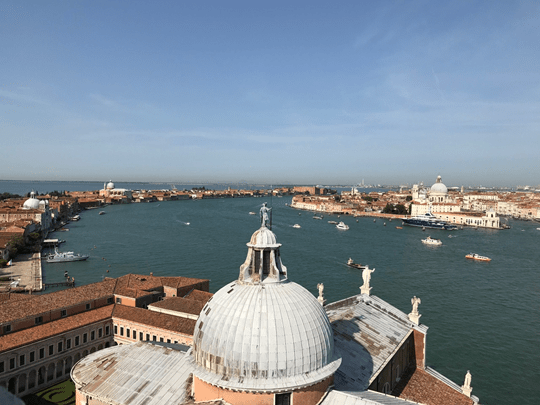
Venice
Take Venice, for example. Everyone can immediately picture its physiognomy. A city built on sandbars and tidal flats floating on the sea. Canals run through it, waterways wind their way around, and even taxis and buses are boats. The gondola is another facet of its character. The Grand Canal divides the city in an inverted S-shape, connecting the railway station at one end to St. Mark’s Square at the other. The only ways to cross the Grand Canal are the bridge in front of the station and the Rialto Bridge. Both bridges and the streets are pedestrian-only. There are no cars to be seen.
Magnificent palaces line the Grand Canal, evoking a sense of its former splendor. St. Mark’s Square is centered around St. Mark’s Basilica and its bell tower, with the Palazzo Ducale, adjacent to the basilica, facing the small square and the sea. The buildings surrounding the large and small squares, or facing the sea, each possess their own distinct character while creating a unique harmony. This landscape, open to the sea and sky, is truly the face of the city of Venice. Beyond that lies a secret labyrinth. No matter how much you wander, you keep stumbling upon canals that lead to dead ends, getting lost and losing your sense of direction. The shadows that support the realm of consciousness bathed in bright sunlight—the realm of the unconscious. A city of celebration and sensuality that can never be fully defined by reason.
I visited Venice at the end of summer 2018. I went to check on the work I had submitted to the Biennale, having been invited by the Hong Kong Pavilion. I spent the week prior in the Swiss mountains. I had gone to participate in Rencontre Architecture Musique Ecoligie, a conference on architecture, music, and ecology held in the town of L’Échelle, deep in the mountains beyond Martigny—one of the central cities of the Valais region in the Alpine valleys. Afterward, I traveled from Sion, the capital of the canton, to Venice on the Euro City express train.
Switzerland already had a hint of autumn in the air, but as we passed through the Simplon Tunnel carved through the Alps and entered Italy, the sunlight suddenly grew stronger and the scenery became brighter. The train car also became noisy with loud voices and animated gestures. The idyllic rural landscape of Switzerland gave way to a complete transformation, and the colors of the trees changed. The train passed through a plain dotted with numerous cities. Milan, Brescia, Verona, Vicenza… and eventually, the distinctive silhouette of a city floating on the sea came into view. It was Venice. At the end of a long, straight bridge, I could see two massive cruise ships moored in the harbor at the edge of the city. They seemed far too large compared to the delicate scale of the architecture. The train eventually glided into its final stop, Santa Lucia Station.
This city, which developed with trade at the center of its urban activity, amassed immense wealth. It invested that wealth in defense and aesthetics. In this respect—as a city-state with a powerful navy that dominated the eastern Mediterranean—it shares similarities with ancient Athens. Ancient Greek cities, too, cultivated an aesthetic appeal that drew people in. Cities—especially those whose activities center on trade with a wide-ranging region—possess an attractive urban landscape. They present themselves visually. Metaphorically speaking, they bloom like beautiful flowers. To attract the insects that bring wealth. To demonstrate that this is a peaceful realm where trade can be conducted with confidence. To establish this peaceful realm, robust armor is always concealed behind the beautiful attire.
The Facade
The history of European architecture is the history of the facade. It would not be an exaggeration to say that such great importance has been placed on the design of the facade. Just as cities needed a beautiful face, the buildings that shaped the city were also required to have a face. Since squares were the centers of commerce and politics, buildings facing the square were particularly required to have an authoritative facade.
Along the Mediterranean coast, language also developed as a political discourse spoken in public spaces. It became a language with clear articulation and a clear logical structure so that it could be heard distinctly even outdoors. When I participated as the commissioner of the Japan Pavilion at the 1996 Milan Triennale, a young woman serving as the Speaker of the House appeared in a pure white suit to deliver the opening speech. Although I could hardly understand the Italian, the musical richness of the language’s intonation made me realize that this was indeed a language honed for public speaking in the square. It is entirely different from a language that developed for whispered, secretive conversations in cramped rooms.
In other words, Europe has honed a language and architecture that assert themselves clearly to the outside world. In Japan, architecture is fundamentally detached from the city and does not reveal itself to the public. It has no need to have a face. Shrines and temples are set back from the street, and private residences are enclosed by walls. It is, so to speak, an aesthetics of withdrawal. There is no assertion of self. Even the language does not require a subject. One could argue that the Kyoto machiya that developed in the early modern period do have a façade. Of course, since they are commercial buildings, they do have a face facing the street. However, they are not the kind of architecture where each building has its own distinct face and asserts its individuality. Even if the facades are adorned to create a streetscape, there is no strong assertion of self; instead, they share architectural elements with neighbors and blend into the urban context. Cultural interest lies rather in the inner gardens and detached pavilions, with the ideal being a “mountain retreat within the city.”
Palace
In Europe, the palace is the architectural type that most strongly asserts its presence to the outside world, but in Japan, it is built quietly and set back from the street. About 25 years ago, I guided a Greek architect through Katsura Rikyu. While it is now commonly translated as “Katsura Villa,” there was a time when it was referred to as “Katsura Palace.” “Palace”—that is, a palace. Standing before its discreet and elegant appearance, he laughed and said, “Where is the palace?”
Of course, he knew about Katsura Rikyu and was aware of the assessment that it anticipated the form of modern architecture—as described by Bruno Taut and Gropius—which is transparent, light, breaks away from symmetry, and lacks a main façade. That is precisely why he joked, “Where is the palace?” After all, a palace should invariably possess a certain dignity and presence—and above all, it should have a “face,” shouldn’t it? Indeed, Japanese architecture fundamentally lacks a “face.” It has shaped such an urban context and an aesthetic of “retreat.” This applies to architecture, language, and culture in general. Japanese society had no need for Baroque urban planning aimed at creating a Palace of Versailles or magnificent cityscapes.
Authority
I have already mentioned that in Venice, palaces shape the city’s character. This is not unique to Venice; it is a common tactic throughout Europe for displaying wealth and power, and people are often susceptible to such displays of authority. Even in modern society, financial institutions such as banks have carried on this tradition of adopting imposing facades; indeed, the General Headquarters (GHQ) chose the Dai-ichi Life Building—which boasts the most magnificent facade along the moat—as its base for governing Japan.
While comparing only Europe and Japan is somewhat one-sided, it is not without merit as a representation of the universal and the local within modern civilization. That said, if we broaden our perspective to include Islam—which exerted an influence approaching universality prior to European civilization—and China, the linchpin of East Asian history, it becomes clear that the façade has indeed been a central concern in urban architecture. The splendor of Islamic squares and mosques is beyond dispute, and China’s preference for symmetry and frontality is self-evident. Great powers invariably take an interest in facades.
In this regard, it is easy to understand why modern architecture abandoned the facade and rejected symmetry. Modern architecture was fundamentally developed by socialists in the broadest sense—that is, it was a style cultivated by architects who kept the equal and free common people in mind—and thus sought to draw a clear line between itself and authoritarian styles. Since they believed that the very concept of “style” was inherently rooted in authoritarianism, “breaking away from style” became their rallying cry.
That said, ideals are often bound to politics and capital and inevitably undergo transformation; Russian Constructivism was eventually altered in an authoritarian manner by Stalin, and those who could not keep up disappeared. One need only think of Leonidov. Italian Fascism succeeded in transforming the finest aspects of Modernism into an authoritarian style. One need only look at Terragni and Libera. The Nazis had Speer, but under Hitler’s preferences, they moved toward magnifying and purifying the expression of stylized classical architecture. As for Japan, another totalitarian state, Hitoshi Watanabe—who designed the Dai-ichi Life Building mentioned earlier—was also the talented designer behind the National Museum in Ueno (famous for Kunio Maekawa’s criticism of the competition) and and the Hattori Watch Store in Ginza. He was a talented designer and an architect of the same age as Le Corbusier. In Japan, a country that lacked the concept of the façade, he referenced the West and, despite being forced to adhere to the baffling concept of “Japanese taste,” realized buildings with a presence befitting their era. If he had been born in Europe, what kind of architecture might he have designed? Politics distorts ideals.
Capital
Just as in politics, capital also places a strong emphasis on facades. It seeks to attract attention in ways that do not rely on authority, pursuing expressions of high absolute value regardless of whether they are positive or negative. Take, for example, Las Vegas, as analyzed and evaluated by Venturi. In the case of Venice, too, the focus is clearly more on the expression of capital than on politics. “Forms of consumption of wealth” recur throughout history. The glorification of facades is the most obvious manifestation of this.
However, in the case of capital, there is also an aspect that targets not just the superficial facade but the three-dimensional space itself, and this has developed in parallel throughout history. Take, for example, atriums and theme parks. Rather than placing the human body outside, they incorporate it into the interior to sell an experience. Spatial experiences, too, become objects of consumption and a powerful means of gathering people.
Since the spirit of modern architecture lay in the expression of space, capital also focused on this aspect. Hotels and commercial facilities incorporated galleries, passages, and atria, forming malls and promenades. However, as these structures grew massive, facades began to reappear within them. The design chosen at that time was not that of Modernism.
Because it lacked flowers. The abstract, lofty, and ascetic stance that rejected Modernist ornamentation lacked clarity, so it is no wonder that architecture returned to facades that were immediately recognizable from the outside. The transition to Postmodernism can also be clearly understood within this context.
Postmodernism
One of the catalysts for the shift from Modernism to Postmodernism was the façade. Modernism, in principle, rejected the very concept of the façade. Postmodernism seized upon this point, arguing that a lack of meaning or narrative is, in itself, barren.
The façade is a device for generating meaning. Is it imposing, silent, inviting, conversational, or smiling? The concepts proposed by Postmodernism—such as richness of meaning, ambiguity, complexity, ambiguity, and contradiction—are all things that Modernism had discarded. It sought to overturn the entire stance of Modernism—intentionally and in a highly strategic manner.
Robert Venturi’s *Complexity and Contradiction in Architecture* and *Learning from Las Vegas*, which pioneered postmodernism, are precisely texts that reclaim the façade. Both the Guild House and the Mother’s House succeeded in creating a fresh impression by bringing to the forefront the very façades that Modernism had rejected.
Capital quickly jumped on this trend, and postmodernism became the style that epitomized the “consumption of affluence” in the latter half of the 20th century. After all, the façade is the quickest way to express authority or stand out. Achieving this through spatial design requires both time and effort. Venturi cloaked this in the intellectual garb of European tradition—or, more specifically, Italian tradition—which is why it was accepted by capital seeking quick results, as well as by the political sphere. It was perceived as being close to the general public. After all, winning over the masses is now the goal of both politics and capital.
Postmodernism began as a fundamental critique from history and culture against Modernism, which tended to celebrate technology and industrial society. However, it eventually fused with the populist strategies of politics and capital, as well as aristocratic nostalgia (one might recall Prince Charles’s penchant for the past), and began to be studded with easily recognizable historical motifs, shifting toward Postmodern Historicism. The depletion of creativity and this shift occurred simultaneously.
That said, the restoration of the façade—which Modernism had cast aside—was a major event. A taboo was broken, and one of the main currents of architectural history was revived. It marked the restoration of a subtle yet undeniable idea: that the history of the façade is, in fact, the history of architecture. We read style in the façade. The history of world architecture is written along these lines. Therefore, Japanese architecture does not fit into the mainstream of world architectural history. It cannot be described. This is because it lacks a façade.
Venturi
Let’s briefly revisit Venturi’s arguments as presented in *Learning from Las Vegas*. Venturi divides buildings into two broad categories: the “duck” and the “decorated shed.” The duck places emphasis on the form itself, whereas the decorated shed—regardless of its structure—possesses a front that draws attention to itself. In other words, it has a façade. According to him, Chartres Cathedral, for example, is a Duck. The Palazzo Farnese is a Decorated Shed. Chartres Cathedral is the crowning achievement of Gothic architecture, demonstrating superb architectural accomplishment in both its spatial structure and the symbolism of its interior spaces, yet he boldly asserts that it is a Duck. He does add, however, that it also possesses aspects of a “decorated shed.”
Of course, Venturi’s intention is to affirm the superiority of the “decorated shed.” His own Guild House, which he himself describes as “uncool” at first glance, possesses a “symmetrical, palazzo-style composition.” The palazzo is a symbol of history and culture. In other words, it has a façade.
In contrast to the Guild House, Paul Rudolph’s Crawford Manor is stylish and “pretty as a whole,” while the Guild House is unstylish but “pretty from the front.” The Crawford-Mener may be a magnificent composition as a whole, but it lacks a façade. In a sense, it strays from the mainstream of history. It is his own work that follows the mainstream; no matter how kitschy or poor, ugly or ordinary it may be, the legitimacy of history lies on the side of his own work.
Ultimately, Venturi laments that Modernist architecture has become a “duck”—a structure where the whole has turned into one giant ornament. By applying cynical and costly distortions to programs and structures, we diligently produce these “ducks.” Above all, these ducks do not fit into the streetscape. For the city and for architecture, the restoration of the façade—the restoration of meaning—is the urgent task required to save Modernist architecture, which lacks both charm and appeal.
Contextualism
The philosophy of contextualism also contributed significantly to the revival of the façade. Because Modernist architecture is designed as a standalone entity, it has lost its connection to the urban context. To design a building, one must interpret the context of the site. Indeed.
It is undeniable that the ideal form of Modernism was that of a unique objet d’art, and its representative works all stand tall as individual entities. Needless to say, suburban single-family homes like Villa Savoye, Fallwater, and the Farnsworth House—even when situated in the city—tend to challenge their surrounding context, throwing cold water on the stagnant, traditional streetscapes. Or they achieve a solitary independence and detachment.
For historic streetscapes, Modernism was a double-edged sword. This was especially true when design was handled poorly—when technocratic, or simply “rational” (for better or worse) approaches led to homogeneous repetition. Context was Modernism’s Achilles’ heel.
In Japan, however, the problem lies on a different level. The context itself—which should be respected or challenged—is either undefined, unclear, or constantly changing. There is no context to rely on. Lifestyles are changing drastically, and we are still in the process of exploring what architecture should look like in modern cities—dealing with fireproofing, increased density, and changes in transportation patterns. We are far from a steady state.
In cities like those in Europe, which have a relatively stable urban context, the appearance of buildings that completely stand out from their surroundings is a major nuisance—unless they are truly exceptional. Modernist architecture was rooted in a fundamental goodwill and developed on the premise that everyone possessed the design sensibility of Mies van der Rohe or Le Corbusier; consequently, much of the urban landscape has resulted in regrettable outcomes. We must make architects lacking in taste swear to respect context and adhere to codes. To put it paradoxically and ironically, that is the reality.
Disappointment with and reflection on Modernist architecture gave rise to Contextualism. From this perspective as well, the façade is being reevaluated. This is because it concerns the manners of buildings facing public spaces such as urban streets and squares. To sit down to a formal meal, one must know how to use a knife and fork. One must present a proper appearance. This was also a challenge faced by those who explored the state of Japanese architecture and cities during the Meiji period.
In the Meiji era, therefore, public architecture had to be Western-style, and the educational institutions training its engineers had to teach Western architectural styles. When formal dining fell out of favor and manners changed, a different form was required. We have now entered an era that recognizes diverse eating styles as culture. The vision of universal values has been lost.
Rather than being in an antagonistic relationship, the universal and the particular are complementary. Civilization aspires to the universal, while culture moves toward the particular. Civilization seeks breadth, while culture seeks depth. History is a pendulum.
Postmodernism and Contextualism originated in the United States. Geographically, of course, America and Europe are distinct. Yet European culture has always underpinned the American intellectual scene; Venturi analyzed Las Vegas by discussing Italian cities, and Corun Low, who spearheaded Contextualism, was a British scholar based at Cornell University. In the collective unconscious, intellectualism is always rooted in Europe. And urban landscapes, too, are discussed primarily in relation to those of Europe. The accumulation of a long history possesses an undeniable power.
In Japan’s case, there must be a new relationship between the universal and the particular, and there must also be different paths to follow.
Palladio, Alberti, Brunelleschi
Let’s return to Venice once more. Across from St. Mark’s Square, the churches of San Giorgio Maggiore and Il Redentore come into view. Their white facades appear against the cityscape on the opposite shore as if cranes had alighted there. Both are works by Andrea Palladio.
Church architecture has always placed great importance on the facade, for it serves as the gateway to the divine realm. Palladio studied ancient architecture, such as that of Rome, and became a master of facade design. The interiors are also simple and beautiful; the Villa Rotonda in Vicenza features a facade that faces all four directions, and the space within the basilica is magnificent. However, Palladio’s true genius lies in his facades. The elegance and refinement of his facade designs had an immense influence on later architects.
During the 16th century, when Palladio lived, Venice was already in decline, yet the work of refining the city’s aesthetic continued. For an economic city to survive, it had no choice but to transform itself into a cultural city. One might say that Palladio provided the finishing touch to the city of Venice. In a sense, he gave it a face—a representative face.
While Palladio exerted a profound influence on future generations through his *Four Books on Architecture*, there was a 15th-century pioneer named Alberti. His *Ten Books on Architecture*, while drawing on Vitruvius, never strayed from the fundamental scope that architectural theory should possess—namely, what architecture should be in its true form and for the future. Alberti designed and supervised many projects, but the fact that many of his masterpieces were facades clearly reflects his architectural philosophy. The difference is clear when compared to Brunelleschi, whom Alberti respected.
In fact, Brunelleschi rarely realized his own facade designs. Even at Florence’s Cathedral of Santa Maria del Fiore, he demonstrated his great talent in the construction of the soaring dome, while the facade was not his concern. The facades of both the Basilica of San Lorenzo and the Basilica of Santo Spirito—both of which he designed in their entirety—remain unfinished. Or, they were not designed by Brunelleschi. It is not that Brunelleschi was incapable of designing facades. Rather, his interest likely lay in more architectural construction and spatial design.
Alberti, on the other hand, devoted all his energy to the facade. Although Alberti was younger, it was he who established the classical image of the Renaissance architect as an individual. He provided historical justification and design legitimacy for the “royal road” of the façade, and was recognized by patrons not merely as a craftsman but as the overseer of the entire architectural project. In contrast, Brunelleschi was an engineer, a craftsman, and a conceptualizer of space. Rather, he became, so to speak, a forerunner of the modern image of the architect. While Alberti designed facades, Brunelleschi conceived spaces. Alberti honed a perspective that surveyed the entire history of architecture, while Brunelleschi devised new spatial structures and construction methods.
If we were to forcefully apply Venturi’s classification here, Alberti would belong to the Deco-rated Shed school, and Brunelleschi to the Duck school. Palladio also demonstrated rich conceptual power as a member of the Duck school, but in terms of his influence on later generations, he can be classified as part of the Deco-Shed school. In other words, both Alberti and Palladio follow the mainstream lineage of European architectural history—including in the fact that they wrote books.
The Universal and the Particular / Civilization and Culture
That said, however straightforward it may seem, I am reluctant to apply such simplistic classifications. However, if we consider that history is like a pendulum, that the universal and the particular are complementary, and that civilization and culture swing in opposite directions—and furthermore, if we reflect on the fact that humans are irrational beings even as they seek rationality—it is truly fascinating that even a single façade can give rise to such a wide variety of approaches and strategies.
The richness of the world opened up by Modernism has likely not yet been fully tapped. Even when we include Postmodernism and Contextualism, as well as the various movements and trends that followed, we have still not managed to transcend Modernism’s fundamental stance—one that finds both the rationality required to meet the demands of cities and society in steel, concrete, and glass, and the poetic potential of materials themselves. Local materials are certainly appealing, but they remain, after all, particularities—mere complements to the universal. It cannot be denied that this serves as a constraint on our streetscapes and architectural culture. Yet, the particular is the particular.
Amid the discontinuous and unfinished state of today’s cities—especially those in Asia—we must nevertheless find there a sense of wonder, joy, radiance, and beauty. The coexistence of a gaze toward the universal and compassion for the particular hinders a straight path toward a homogeneous, uniform, and featureless rational future. Is it impossible to conceive of a new aesthetics for an unfinished and discontinuous world, and to envision an urban space that, while upholding rationality, does not exclude the irrational, the unconscious, or joy?
The human brain is capable of making errors. That is its strength. It is the source of poetry, surprise, and joy. The bedrock of culture is buried with diverse possibilities. Civilization is the pursuit of convenience, while culture is the refinement of inconvenience. The rationality of civilization and the irrationality of culture are also complementary. The absence of a face or a subject should not be categorically rejected. It may be acceptable to have relationships guided not only by visible faces but also by subtle auras. Perhaps there can be a civilization that is drawn to a figure seen from behind.outright. Perhaps there should be relationships guided not only by visible faces, but also by subtle presences. Perhaps there should be a civilization that is drawn to its back view.

コメントを残す