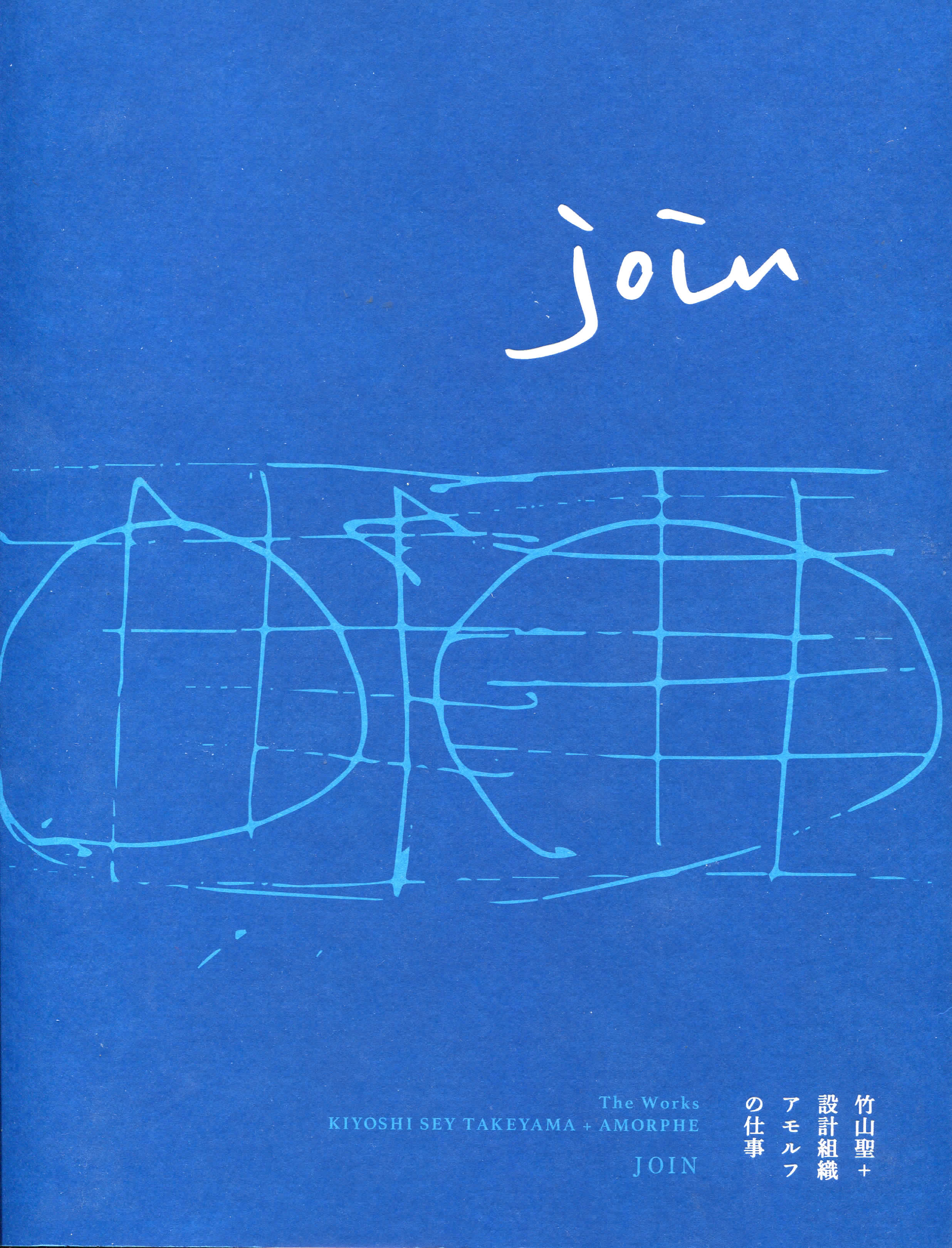
『竹山聖 建築思想集――都市・身体・可能世界』01
不連続都市空間論 2000
DISCONTINUOUS CITY 2000
竹山聖
「ではエロスとは一体なんでしょう。滅ぶべき者なのですか。」
「けっしてそんなことはありません ‘」
「ではいったい何ですか。」
「さっきもいったように、滅ぶべき者と滅びざる者との中間に在る者なのです。」
ープラトン『饗宴』より
Then what is Eros? A mortal?
Hardly.
But what, then?
As I said before, intermediate between mortal and immortal.
—Plato: The Banquet

予感 1989
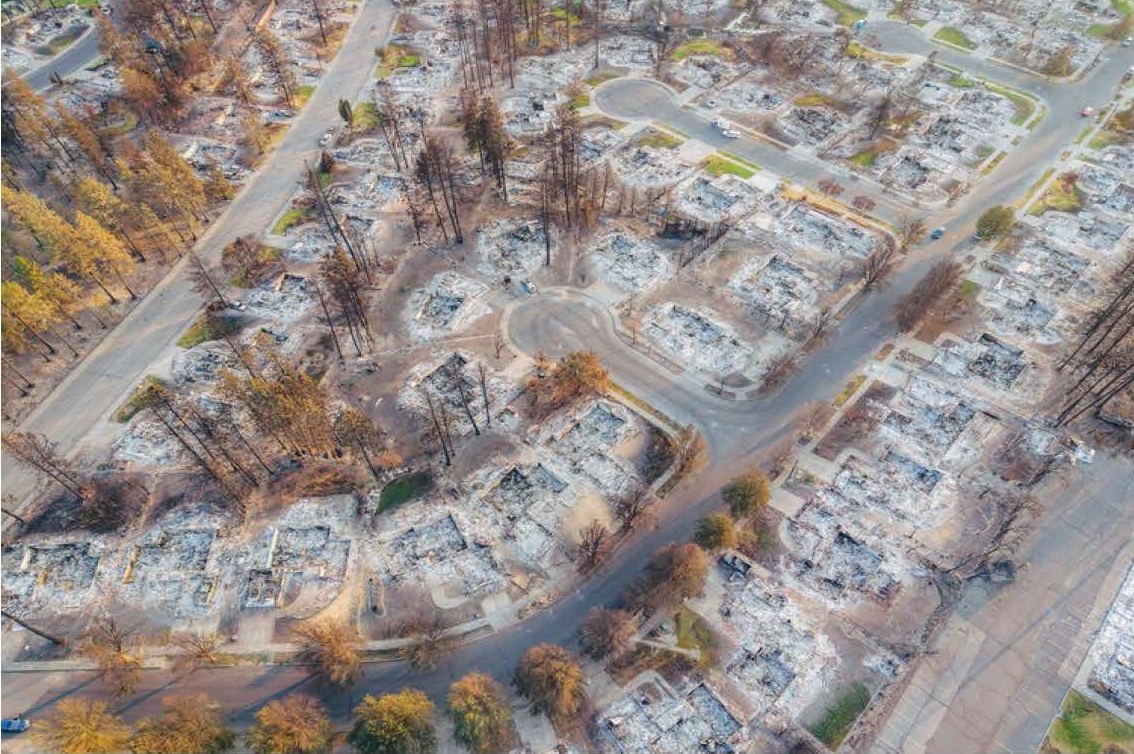
過去は静かに眠りにつくことを許されず、未来は夢の中にとどまることを禁じられる。あら ゆる時間が現在に流れ込む。あらゆる出来事が、場所が、「いまここ」に流れ込む。メディアが意識を加速し、交通の速度が身体を引き裂くだろう。世界は切断され、重ね合わされて、断片の輝きに満ちるだろう。都市の未来は不連続な出来事に溢れるだろう。未完結なオブジェの散乱を誘導するだろう。
不連続点を求めて人は集まり、出来事が出会う。未来の記憶は、異質な事物の衝突の現場、すなわち異なる世界の接触点に育まれることだろう。
Premonition 1989
The past is not allowed to fall quietly asleep, and the future is forbidden to remain in dreams. All time flows into the present. Every event, every place, flows into the “here and now.” The media will accelerate consciousness, and the speed of transportation will tear the body apart. The world will be severed and superimposed, filled with the brilliance of fragments. The future of the city will overflow with discontinuous events. It will induce the scattering of unfinished objects.
Seeking points of discontinuity, people gather, and events converge. Memories of the future will be nurtured at the sites of collisions between disparate things—that is, at the points of contact between different worlds.
関係
さながらイオン状態の電子の相互交換のように、現代都市はますます各要素の相互作用の量と速度が増大してきた。「未完結な出来事が不連続に連続している」という言葉を、僕はこの 状況に捧げている。すべてのものが未完結な形でしかその存在を許されず、それらが何の脈絡 ももたないかのように不連続に連続している・
もとより、一都市はけっして「全体」ではありえなかった。都市は常に「部分」であった し、これからもありつづけるだろう。なぜなら都市はその出自からして、生産力の過剰を調整し、交換し、分配する機能を与えられ、したがって常に他者一後背地、旅人、神、敵、等々ー と関係づけられる宿命を負って来たからである。
Relationships
Just as in the exchange of electrons in an ionic state, modern cities have seen an ever-increasing volume and speed of interaction among their various elements. I dedicate the phrase “unfinished events continuing in a discontinuous manner” to this situation. Everything is permitted to exist only in an unfinished form, and these elements continue in a discontinuous manner, as if they held no context whatsoever.
From the outset, a city could never be a “whole.” The city has always been a “part,” and will likely continue to be so. For from its very origins, the city has been endowed with the function of regulating, exchanging, and distributing surplus productive power; consequently, it has always borne the fate of being linked to others—the hinterland, the traveler, the divine, the enemy, and so on.
時間
都市は記憶の織物であり、建築は時間の培養器である。古来、人間の生活を豊かにしてきた 技術の多くは、時間の保存技術であった。調理、そして農耕の技術は、食料の保存(言うまでもなく、それは時間の保存だ)を通して人々を飢えから解放した。建築や都市もまた、政治や宗教といった生産物分配のシステムの器として、さまざまな時間的差異をつくりだす装置であった。
書物は思考の時間を保存し、写真・録音・映画・ピデオ等々もまた、光や音により紡ぎだされた時間の保存装置だ。建築は時代のプログラムを空間化し、空間の構想者のさまざまな工夫によって、さまざまな時間の在り方をも空間化して来た。建築がその構想の次元において時間の空間化が目論まれ、また歴史の流れの中で時間の刻印を受ける存在であるとしたなら、それは記憶の工場でもあって、われわれに時間の厚みを生きることを伝えてくれもするだろう。
Time
The city is a tapestry of memory, and architecture is an incubator of time. Since ancient times, many of the technologies that have enriched human life have been technologies for preserving time. Cooking and agricultural techniques freed people from hunger by preserving food—which, needless to say, is a form of preserving time. Architecture and cities, too, as vessels for systems of production and distribution—such as politics and religion—have served as devices for creating various temporal differences.
Books preserve the time of thought, and photographs, recordings, films, videos, and the like are also devices for preserving time, woven together through light and sound. Architecture spatializes the programs of an era, and through the various ingenuity of its designers, it has also spatialized diverse ways of experiencing time. If architecture is intended to spatialize time at the level of its conception, and if it is an entity that bears the imprint of time within the flow of history, then it is also a factory of memory, one that conveys to us the depth of living within time.
かけら
通信・交通手段の発達によって、あらゆる情報へのアクセスが容易になってきたが、その分、情報の断片化もまた進んでいる。むしろ情報の断片化を受容する社会、つまり情報のかけらで良しとする社会が、通信・交通手段の発達を可能にした、といえるかもしれない。われわれはもはや圧縮され、稠密化された情報のかけらしか得ることができないのだ。
われわれはかつてのように、すべての情報を共有する自足したユートピアを描きえないし、描こうとも思っていないだろう。もはや明滅する断片的情報の洪水のさなかに、自分の位置を定めるほかはないのだ。あらゆる情報、世界の全体像などは、現在というすべての時間が流れ込み、共存する状況にあっては、何人も知りえぬことなのであり、それら未完結な出来事が不連続に連続する世界像しか、おそらくわれわれは将来にわたっても共有することができないだろう。情報の未完結性、さらに言うなら、人間存在の未完結性、これが現在というさまざまな時間の共存体の姿を具現している。
しかしながら、事物が遮蔽されることではじめて、関係が明らかになることもある。遮蔽物が想像力をはばたかせるからだ。そしてそれはまた、他者とのコミュニケーションの欲望を際立たせもする。こうした引き裂かれつつ相互にかかわりあう世界を,われわれは生きているのである。
Fragments
While advances in communication and transportation have made it easier to access all kinds of information, this has also led to an increasing fragmentation of information. In fact, one might argue that it is a society willing to accept this fragmentation—a society content with mere fragments of information—that made such advances in communication and transportation possible. We can no longer obtain anything but compressed, condensed fragments of information.
We can no longer envision—nor do we likely even wish to—a self-sufficient utopia where all information is shared, as in the past. We have no choice but to determine our own position amidst a flood of flickering, fragmentary information. In a situation where all time flows into and coexists within the present, no one can know the entirety of all information or the complete picture of the world; and likely, even in the future, we will be able to share nothing more than a worldview in which these unfinished events continue in a discontinuous sequence. The incompleteness of information—or, to put it further, the incompleteness of human existence—is what embodies the form of this coexistence of diverse moments of the present.
However, there are times when the relationships between things become clear only through concealment. This is because concealment gives free rein to the imagination. And this also accentuates the desire for communication with others. We are living in this world that is torn apart yet mutually intertwined.
メディア
時間もまた、微分化されつつある。
書物という形式が発見されて、われわれには世界が書物のように見えてきた。そしてそのようにして「歴史=物語」が書かれた。写真という形式が発見されて、われわれには世界が写真のように見えてきた。それは断片的、部分的であり、不連続であり凍結している。映画という形式が発見されて、われわれには世界が映画のように見えてきた。それは活動的であり、編集可能であり、虚構的現実の夢想に満ちている。ビデオという形式が発見されて、われわれには世界がピデオのように見えてきた。未完結な出来事が不連続に連続し、スローモーションも早回しも巻き戻しも容易な、すなわちあらゆる時間が操作可能な形でパッケージされた現実が出現したのだ。
人類の発見してきたメディアは人間の意識を改革しつつ、新しい世界の認識を開い てきた。建築が時代の空間意識の表象であるという側面を持つ限り、現在という時 間を表象する建築は、未完結な姿を取ることになるだろう。未来の時間は未完の形象の上に訪れる。
Media
Time, too, is becoming fragmented.
With the invention of the book, the world began to appear to us as if it were a book. And in this way, “history = narrative” was written. With the invention of the photograph, the world began to appear to us as a photograph. It is fragmentary, partial, discontinuous, and frozen. With the invention of film, the world began to appear to us as a film. It is dynamic, editable, and filled with the reverie of a fictional reality. With the discovery of the medium of video, the world began to appear to us as if it were a video. A reality emerged in which unfinished events follow one another discontinuously, and where slow motion, fast forward, and rewind are all easily achievable—in short, a reality packaged in a form where every aspect of time is manipulable.
The media that humanity has discovered have transformed human consciousness while opening up new ways of perceiving the world. As long as architecture embodies the spatial consciousness of its era, architecture that represents the present will inevitably take on an unfinished form. The future arrives upon an unfinished form.
媒介者
「領域」という言葉に対する関心が脳裏を離れたことはない。それは帰属の明らかな、いわば意味の安定している場であり、機能の裏付けをもって建築の主要な空間を支えている。
多くの領域が相互に連関しつつ建築は構成される。ただ、かならずしも機能によっては分類しえぬ領域が存在する。領域相互を結びつけながら、それ自体が自立した空 間であるような。
これが、異質の二者、あるいはそれ以上の領域相互の結びつきをもたらす第三の媒介的空間であって、そこではじめて関係性が生成される。
この媒介的空間は領域相互の連関において極めて重要な役割を果たすのだが、通常、社会から要求されるプログラムに姿を現わすことはない。それは、建築の定義そのものに関わるのであって、建築がいかにあるべきかを追求する過程を通して、建築家が自ら提案してゆくしかない類の空間なのである。
領域相互の連関のさなかに浮かび上がった、関係そのものの場、領域を脱しゆく可能性を持った事物を通してあらわれるダイナミックな力の場そのもの、これを 「超領域」と呼ぼう。
それは「機能なき場」であり、「出会いの場」であり、 「パブリックな場所」 だ。やがて「無為の時間の空間化」、「ゼロスペース」の概念を導きもするだろう。
「超領域」は異なる「領域」が出会い、混じり合い、切り離され、重なり合う流動的な場 だ。異質な事物が出会う場だ。相互に異なる領域から噴出した力の整流器、加速器だ。
どこにも属さず、しかしながらどこにも通じている世界、それが「超領域」と呼ばれる場所の姿だ。開放系の、多様な読み取りを許容する場所だ。他者との交感を果たし、異質な世界との交信を果たしつつ、限りない想像力をかきたてる場だ。「超領域」は、そして言うまでもなく建築は、「想像力解放の装置」なのであるから。
The Mediator
My interest in the term “domain” has never left my mind. It is a space with clear affiliation—a space of stable meaning, so to speak—that supports the primary spaces of architecture, underpinned by function.
Architecture is composed of many domains interconnected with one another. However, there exist domains that cannot necessarily be classified by function alone. They are spaces that, while connecting other domains, stand as autonomous entities in their own right.
This is a third, mediating space that brings about the connection between two or more disparate domains, and it is only there that relationships are generated.
Although this mediating space plays an extremely important role in the interrelationships between different domains, it does not typically manifest itself in the programs demanded by society. It is a space that touches upon the very definition of architecture itself; it is the kind of space that architects can only propose for themselves through the process of exploring what architecture ought to be.
Let us call this “trans-domain”—the very field of dynamic forces that emerges amidst the interconnections between domains, manifested through entities possessing the potential to transcend those domains.
It is a “field without function,” a “space of encounter,” and a “public place.” Eventually, it will likely lead to the concepts of the “spatialization of idle time” and “zero space.”
The “trans-domain” is a fluid field where different “domains” meet, mix, separate, and overlap. It is a place where heterogeneous entities encounter one another—a rectifier and accelerator for forces erupting from mutually distinct domains.
A world that belongs nowhere, yet connects to everywhere—this is the nature of the place called the “trans-domain.” It is an open system, a place that allows for diverse interpretations. It is a space that fosters communion with others and communication with heterogeneous worlds, while simultaneously stirring boundless imagination. For the “Super-Domain”—and, needless to say, architecture—is a “device for liberating the imagination.”
シナリオ
「想像力解放の装置」としての建築は、具体的にはその空間を介して人々の想像力を解放する。空間は、建築的諸要素の関係であり、関係の網目を読み取るシナリオをかくことが、設計という行為の根底にある。
むろんシナリオを裏切るシナリオ、さらに裏切るシナリオ、断念するシナリオ、投げ出されるシナリオ、背反するシナリオ、などなども方法論上の差異であって、ともあれある決断をもって空間は構想され、領域は関係づけられる。
「超領域」は、異質のシナリオの共存する場所と言い換えてもいい。もはや一筋縄のシナリオでは、現代の空間を準備することができない。
Scenario
Architecture, as a “device for liberating the imagination,” specifically liberates people’s imagination through its spaces. Space is the interplay of architectural elements, and devising scenarios that interpret this network of relationships lies at the heart of the act of design.
Of course, scenarios that betray the original scenario, scenarios that betray those betrayals, scenarios that are abandoned, scenarios that are cast aside, and scenarios that contradict one another are all methodological variations; in any case, space is conceived through a decision, and domains are connected.
“Trans-domain” could be rephrased as a place where heterogeneous scenarios coexist. It is no longer possible to prepare contemporary space with a straightforward scenario.
非物質/物質
イヴ・クラインの「空気の建築」には深く魅かれて来た*1。「非物質的領域」に属する空気、火、水などによって構想された建築だ。空気の屋根、火の柱、水の壁、といった具合に。ただし現実には、「空気の建築」はその実現の手続きを痕跡として示す作品しか残っていない。そしてクライン自身、こうした構想のもつ可能性と限界とを、ともに熟知していたに違いないのだ。見えないもの(非物質的領域)を見える形(物質的領域)に転写する、という手続きこそを、イヴ・クラインは生涯かけて追求しつづけたのである。
僕がクラインの作業に魅かれるのも、建築もまた、物質的領域を通して非物質的領域をしめすというプロセスを取らざるをえないからだ。とはいえ建築の場合、「ものの惰性」はとても大きい。物質的領域の論理なくして建築の実現はない。しかも絵画が人間の意識に関わるのに対して、建築は人間の身体(意識を備えた)に関わる。非物質的領域への道のりはますます遠い。意識は非物質的領域を自由に往来するが、身体は物質的領域のくびきを逃れられぬからだ。
意識がいかに仮想現実や映像の世界に遊んでも、身体はあくまでも一個のものであることをやめない。「建築」が生み出す場所や空間が、身体を取り巻く環境である限り、建築はものを通して思考されざるをえず、最終的にもまたものに帰着せざるをえない。クラインの出会った栓桔に、われわれもまた立ち会うことになる。
さまざまなメディアに解体されつつある環境の中にあっても、建築固有の領土はやはり身体に即した空間以外になく、そこを出発点とするよりほかに建築から世界への回路もない。建築は身体に即した環境のメディアである。
Immaterial/Material
I have long been deeply fascinated by Yves Klein’s “Architecture of Air”*1. It is architecture conceived through elements such as air, fire, and water—which belong to the “immaterial realm”—such as roofs of air, pillars of fire, and walls of water. However, in reality, the only works of “Architecture of Air” that remain are those that reveal the traces of the procedures used to realize them. And Klein himself must surely have been fully aware of both the possibilities and limitations inherent in such concepts. It was precisely this process—transcribing the invisible (the immaterial realm) into visible form (the material realm)—that Yves Klein pursued throughout his life.
The reason I am drawn to Klein’s work is that architecture, too, is compelled to adopt the process of revealing the immaterial realm through the material realm. That said, in the case of architecture, the “inertia of things” is immense; without the logic of the material realm, architecture cannot be realized. Moreover, whereas painting engages the human consciousness, architecture engages the human body (endowed with consciousness). The path to the immaterial realm grows ever more distant. This is because while consciousness moves freely through the immaterial realm, the body cannot escape the constraints of the material realm.
No matter how much our consciousness may wander through virtual reality or the world of images, the body remains, above all, a single entity. As long as the places and spaces created by “architecture” constitute the environment that surrounds the body, architecture cannot help but be conceived through objects, and ultimately, it must return to objects. We, too, will come face to face with the cork that Klein encountered.
Even in an environment that is being dismantled by various media, architecture’s unique territory lies solely in spaces attuned to the body, and there is no circuit from architecture to the world other than one that begins there. Architecture is the medium of an environment attuned to the body.
あいだ
パウル・クレーは「造形のなかの運動と時間」を熱意を込めて語り、「絵を、完結した製品として体験されるものでなく、発生の力がその中に動き、流れ、循環し、衝突し、あるいは和解し、さらに流動しつつある生存として考えた」という*2。この「絵」を「建築」と読み替えよう。空間は力の流れの場であり、建築はそれをもたらす抵抗であり整流器である。
「クレーは、時間というものに対して原理の説明者としてではなく、ほとんど呪術者のような感性を持っていた」*3とするなら、クレーの見ていたのは「無為の時間」だ。 クレーの絵は常に、ものと形のあいだ、静謡と躍動のあいだ、断片と無限のあいだ、線と面のあいだ、有彩色と無彩色のあいだ、意味と無意味のあいだを漂っており、このようなあいだに、僕は「無為」という言葉をあてている。
形のあいだを力が往き来しながら、そのさなかにあいだが、すなわち意味の無重力状態が生まれる。それは時間に追われる日々の生活からの解放の空間でもある。
おそらく人間は「無為の時間」なくしていきることはできないのだ。それはなにかとなにかのあいだの時間であり、どこにも属さない空間を呼び出す。
それはおそらく「屈折」の空間となるだろう 「屈折とは真の原子、弾性的な点である。クレーが能動的、自発的な線の発生要素として浮かび上がらせたのは屈折であって、このようにして彼は、デカルト主義者カンディンスキーとは反対にバロックとライプニッツとの親近性を証明したのである。カンディンスキーにとって、角も点も硬いもので、外部の力によって運動へともたらされる。しかしクレーにとってく無矛盾の非概念的概念>は屈折を経るのである」 とジル・ドゥルーズが語る*4のと同じ意味合いを持って。なにより無為は生の直接性そのものであって、なにかのための時間でも空間でもない。 「無為は労働とのいかなる関係も求めようとはしないこれが無為と余暇との違いだ」と、ヴァルター・ベンヤミンが述べているように*5。
Aida/Spaces
Paul Klee spoke passionately about “movement and time in form,” stating that he “conceived of a painting not as a finished product to be experienced, but as a living entity in which the forces of emergence move, flow, circulate, collide, or reconcile, and continue to shift”*2. Let us reinterpret this “painting” as “architecture.” Space is a field of flowing forces, and architecture is the resistance and rectifier that brings this about.
If we accept that “Klee possessed a sensibility toward time that was almost that of a sorcerer, rather than that of a theorist”*3, then what Klee saw was “time of inaction/Mu-I.” Klee’s paintings constantly hover in the spaces between things and forms, between stillness and movement, between fragments and infinity, between lines and planes, between color and achromatic tones, and between meaning and meaninglessness; it is to these spaces that I apply the term “inaction/Mu-I.”
As forces move back and forth between forms, a space—a state of weightlessness in meaning– emerges within that movement. It is also a space of liberation from the daily grind of life, where we are constantly pressed for time.
Perhaps humans cannot live without “time of inaction/Mu-I.” It is the time that exists between one thing and another, evoking a space that belongs nowhere.
It will likely become a space of “refraction.” “Refraction is the true atom, the elastic point. It was refraction that Klee brought to the fore as the active, spontaneous element of line generation; in this way, he demonstrated the affinity between the Baroque and Lipnitz, in contrast to the Cartesian Kandinsky. For Kandinsky, both angles and points are rigid entities, brought into motion by external forces. But for Klee, the ‘non-conceptual concept of non-contradiction’ passes through refraction,” as Gilles Deleuze states*4, conveying the same meaning. Above all, inaction is the very directness of life itself; it is neither time nor space for any purpose. “Inaction seeks no relationship whatsoever with labor; this is the difference between inaction and leisure,” as Walter Benjamin states*5.
孤独
ベンヤミンは無為に関してこうも述べている*6。
無為であるための条件のなかでも、孤独は特に重要だ。いかに些細であったり不毛であったりしようと、すべての出来事から個人的な体験をまず解き放つのは、孤独なのである。なにしろ、孤独は、感情 移入を通して、いかに深層に埋もれてしまいそうな通行人でさえも、個人的な体験に引き入れてしまうのだ。感情移入は孤独な人間にのみ可能なのだ。すなわち、孤独こそが、真の無為にとっての必須条件なのである。
孤独な人間こそが無為の時間に容易に入り込むことができる。日々の生活は社会の中で営まれるのであって、孤独は社会と切断された状態だからだ3無為の時間には孤独が木霊している。
無為の時間を過ごす場所は、都市における微分不能点のようなものではないか、と僕は夢想する。y=f(x)の滑らかな曲線に突如出現する不連続点。微分可能な滑らかな領域と領域を、切断しつつつなぎとめる。 不均質な領域と機能を混在させ、異界と新たな空間的な次元を生成する場所。誰のものでもあり、誰のものでもない場所。自由のありかを自ら発見すべき場所。こうした微分不能点は、いわば裸形の空間であり、空白の場所であり、出来事の出現を待ちうけるばかりか誘起する場所だ。
「超領域」は都市や建築のただなかに生み出される場所であった。今、もうひとつの 微分不能点の可能性を僕は考えている。それはく独身者のためのスタジオ>だ。それは屈折そのものを具現する。
さらにベンヤミンの言葉を引いておごう*7。
無為であることとスタディすることとの近しい関係は、スタジオという概念に具現化されている。スタジオは、とりわけ独身男性にとっては、婦人の寝室に対応している。
経験はどんな結果ももたらさないし、体系ももっていない。経験は偶然の産物であり、本質的な未完結性を帯びている。この未完結であることこそが、無為に過ごす者が好んで引き受けることどもの特徴である。およそ知るに値するであろう物事の収集は、基本的に完結不可能であり、有用かどうかも偶然次第であって、スタディという行為はそのプロトタイプなのである。
く独身者のためのスタジオ>は、無為の時間を捉えることができるのだろうか。
Solitude
Benjamin also has this to say about inaction*6.
Among the conditions necessary for inaction, solitude is particularly important. No matter how trivial or fruitless they may be, it is solitude that first liberates personal experience from all events. After all, through empathy, solitude draws even the most seemingly insignificant passerby—who might otherwise remain buried in the depths—into the realm of personal experience. Empathy is possible only for the solitary individual. In other words, solitude is the indispensable prerequisite for true inaction.
It is precisely those who are lonely who can so easily slip into moments of idleness. Since daily life is lived within society, and loneliness is a state of being cut off from society, loneliness echoes through these moments of idleness.
I often find myself daydreaming that places where we spend time doing nothing are like points of discontinuity in the city. A sudden discontinuity appearing on the smooth curve of y=f(x). A point that both severs and connects the smooth, differentiable regions.
A place that mixes heterogeneous domains and functions, generating another world and a new spatial dimension. A place that belongs to everyone and to no one. A place where one must discover the abode of freedom for oneself.
Such points of non-differentiability are, so to speak, naked spaces, blank spaces, places that not only await the emergence of events but also induce them.
“Trans-domains” were places created within the fabric of cities and architecture. Now, I am contemplating the possibility of another “indifferentiable point.” It is a studio for single people. It embodies refraction itself.
Let me further quote Benjamin*7.
The close relationship between idleness and study is embodied in the concept of the studio. For single men in particular, the studio serves as the counterpart to a woman’s bedroom.
Experience yields no results and possesses no system. Experience is a product of chance and bears an essential incompleteness. It is precisely this incompleteness that characterizes what those who spend their time in idleness willingly undertake. The collection of things that might be worth knowing is fundamentally impossible to complete, and whether it is useful or not depends on chance; the act of “studying” is its prototype.
Can a “studio for the single” capture this idle time?
註
*l 『イブ・クライン展図録』、滋賀県立近代美術館、1985年、pp4~8、竹山聖「イブ クラインの”空
間”-”空気の建築”の射程をめぐって一」
*2,3 滝口修造『画家の沈黙の部分』、みすず書房、1969年、pp58~59
*4 ジル・ドウルーズ『襞ーライプニッツとバロック』、宇野邦一訳、河出書房新社、1998、p27
*5 ヴァルター・ベンヤミン『パサージュ論』、岩波書店、1994年、p355、ただし文脈に即して訳しかえてある。
*6 同書、p361、同上。
*7 同書、p353、同上。
Notes
*1 Catalogue of the Yves Klein Exhibition, Shiga Prefectural Museum of Modern Art, 1985, pp. 4–8; Sei Takeyama, “On the Scope of Yves Klein’s ‘Space’ and ‘Architecture of Air’ (Part 1)”
*2,3 Shuzo Takiguchi, The Silent Parts of the Painter, Misuzu Shobo, 1969, pp. 58–59
*4 Gilles Deleuze, Folds: Lipnitz and the Baroque, trans. Koichi Uno, Kawade Shobo Shinsha, 1998, p. 27
*5 Walter Benjamin, The Arcades Project, Iwanami Shoten, 1994, p. 355; however, the translation has been adapted to fit the context.
*6 Ibid., p. 361; ibid.
*7 Ibid., p. 353; ibid.予感1989


コメントを残す